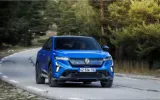
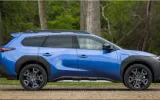


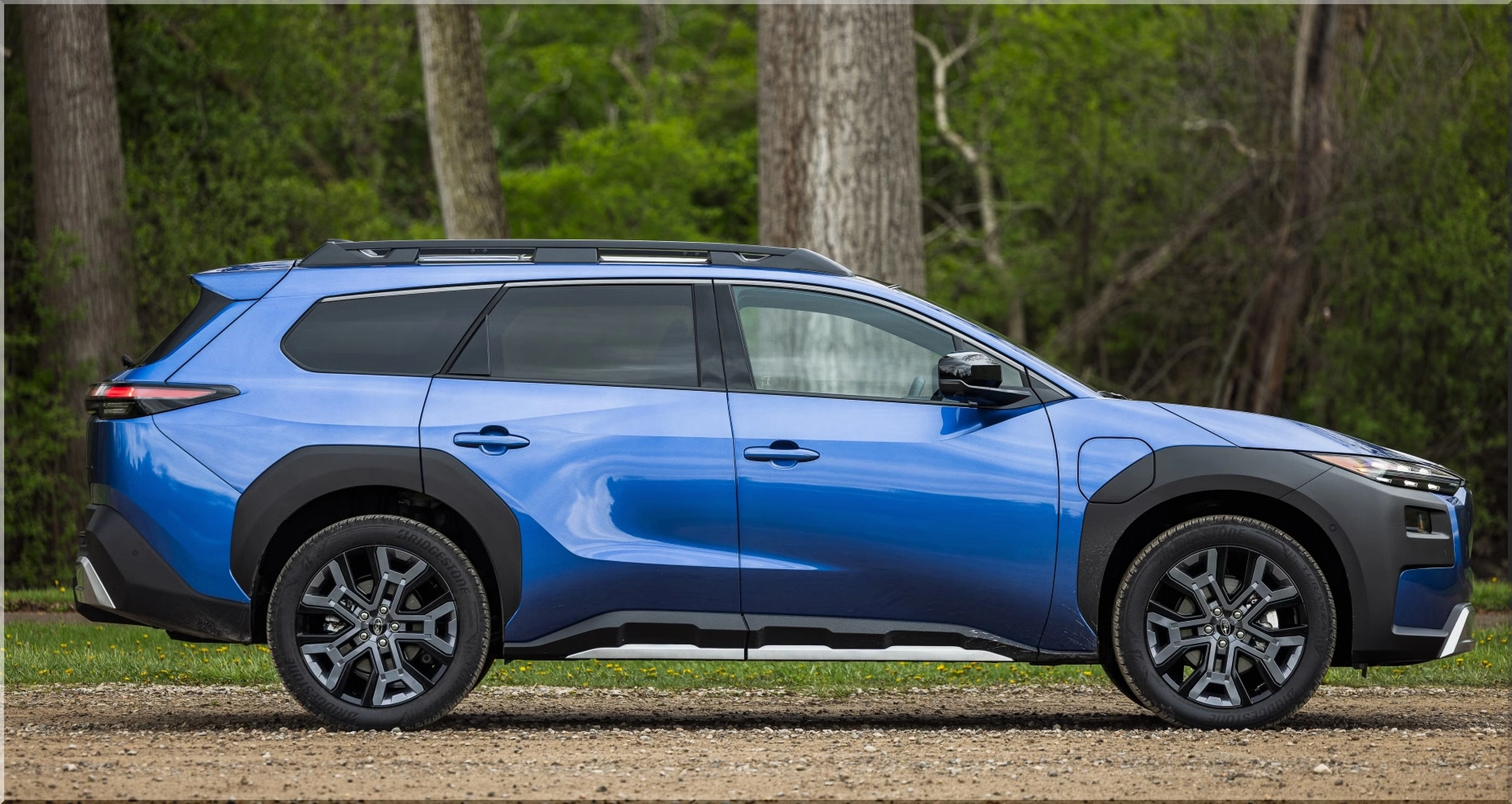
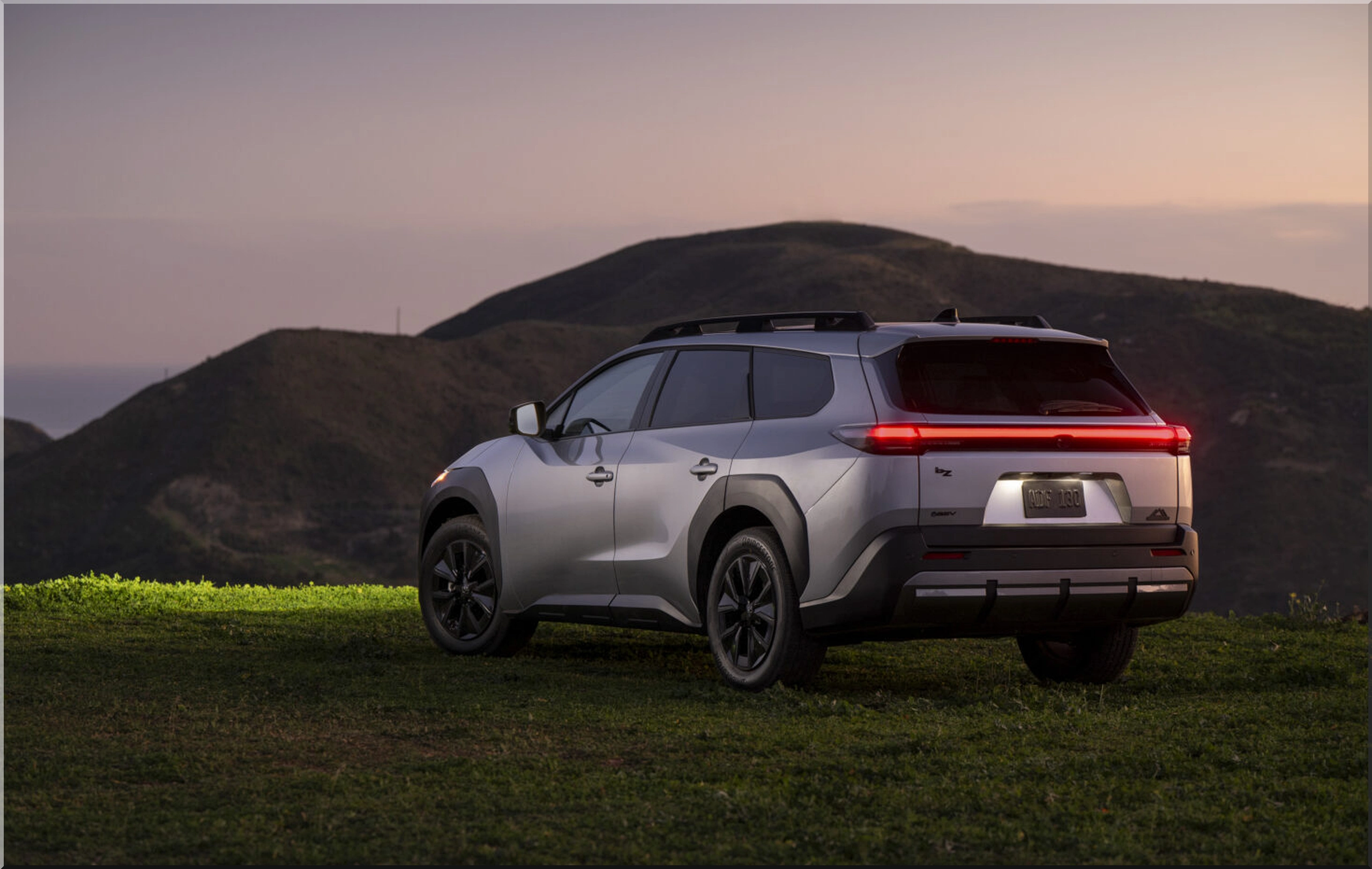
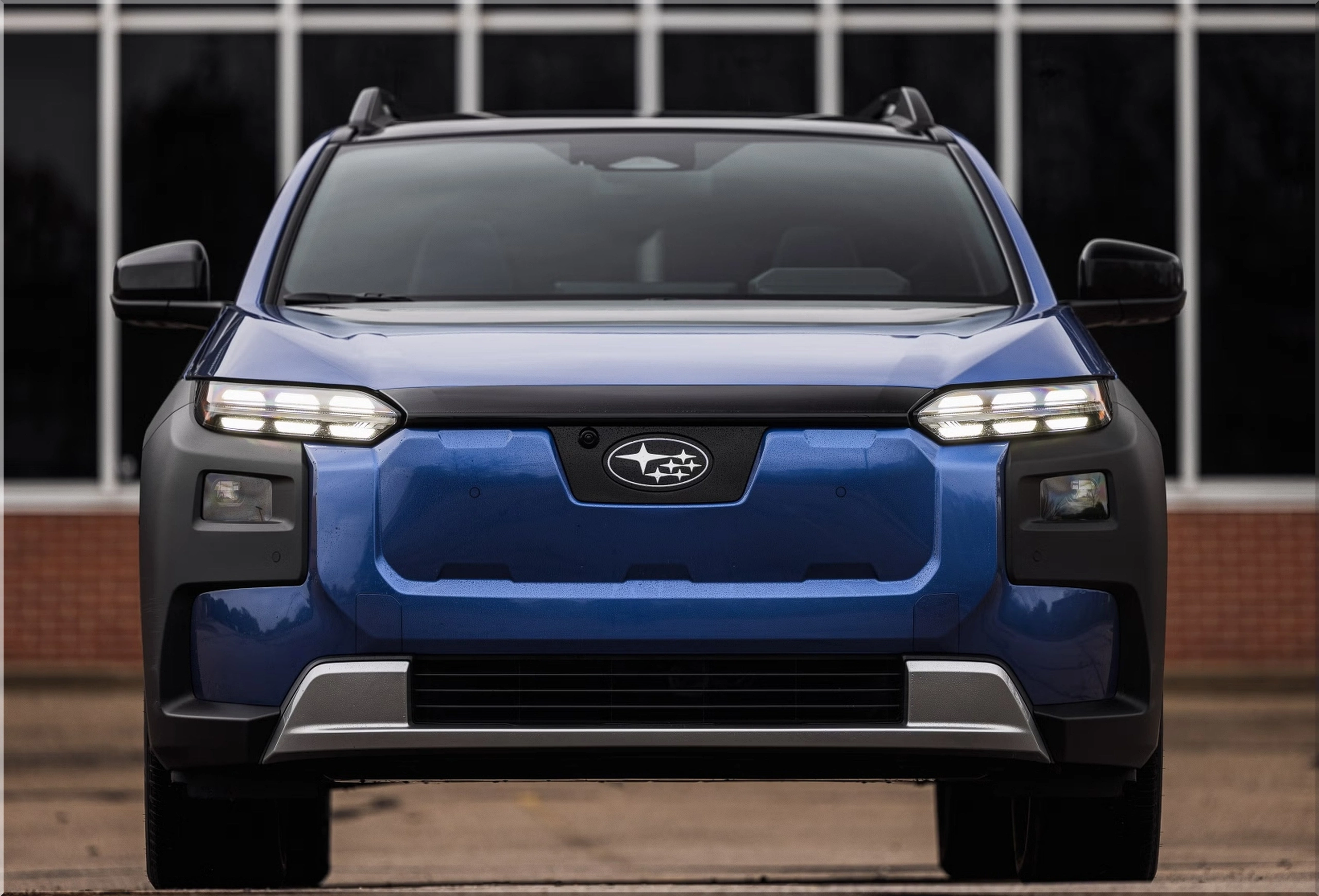
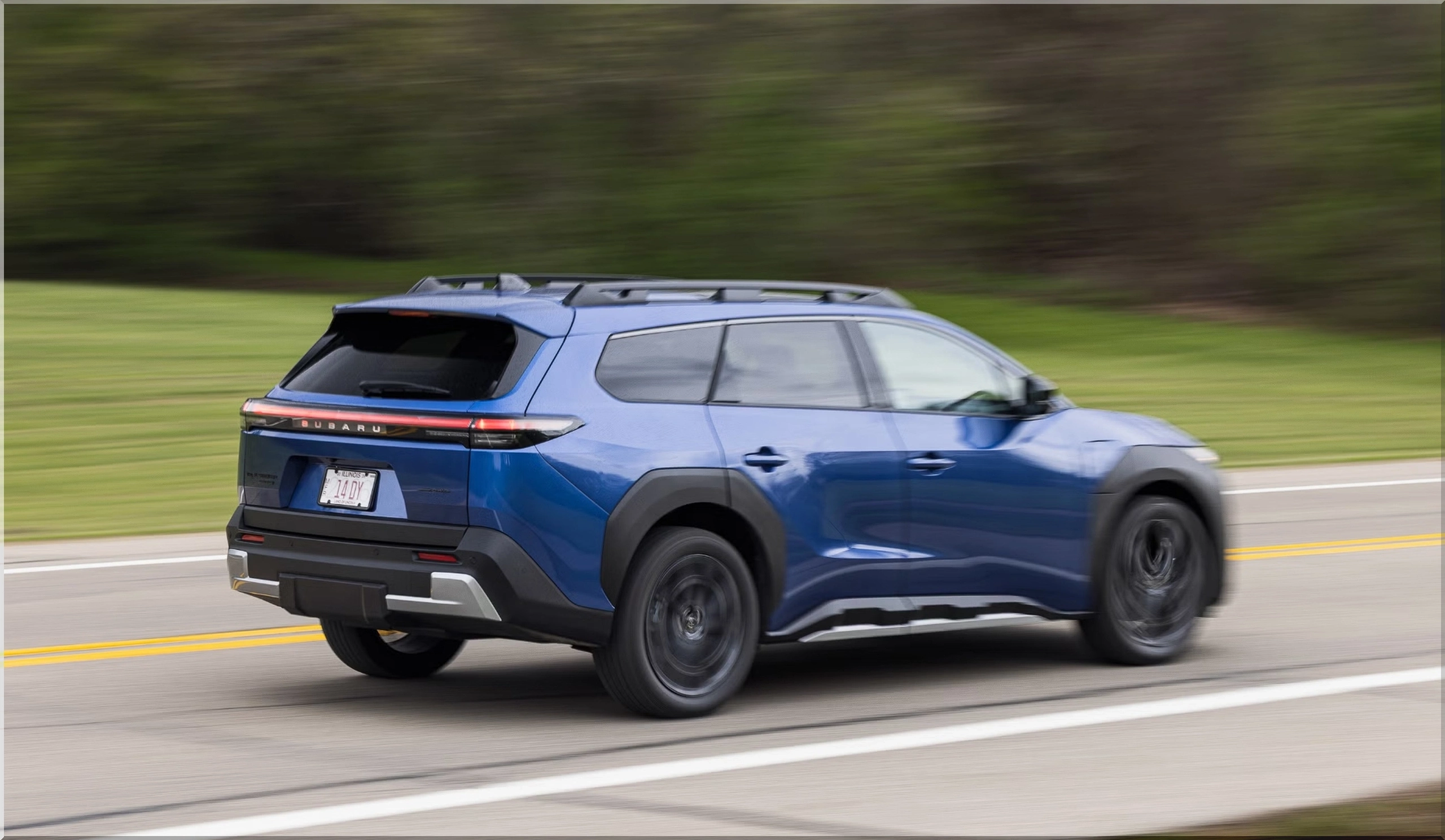
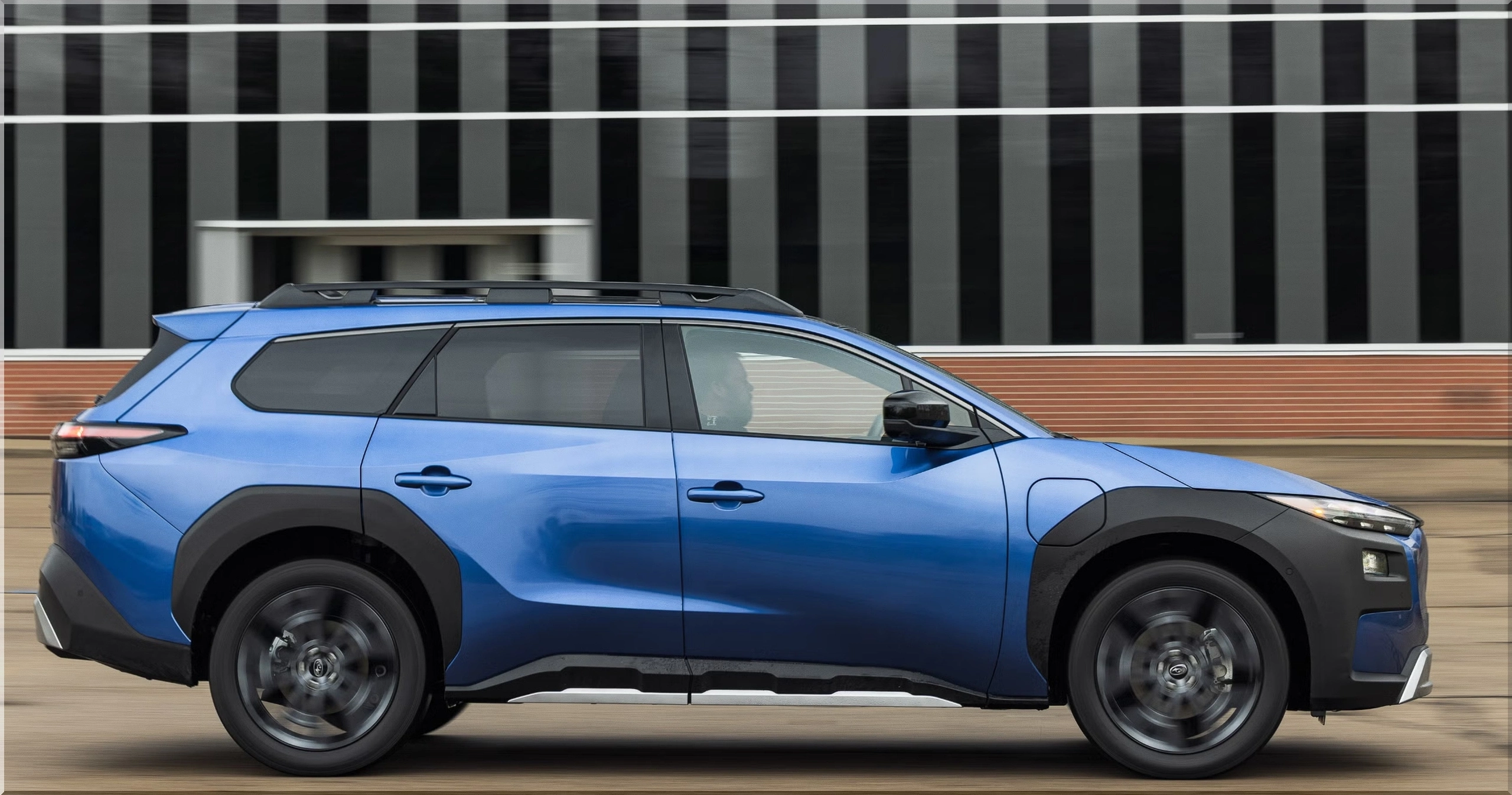
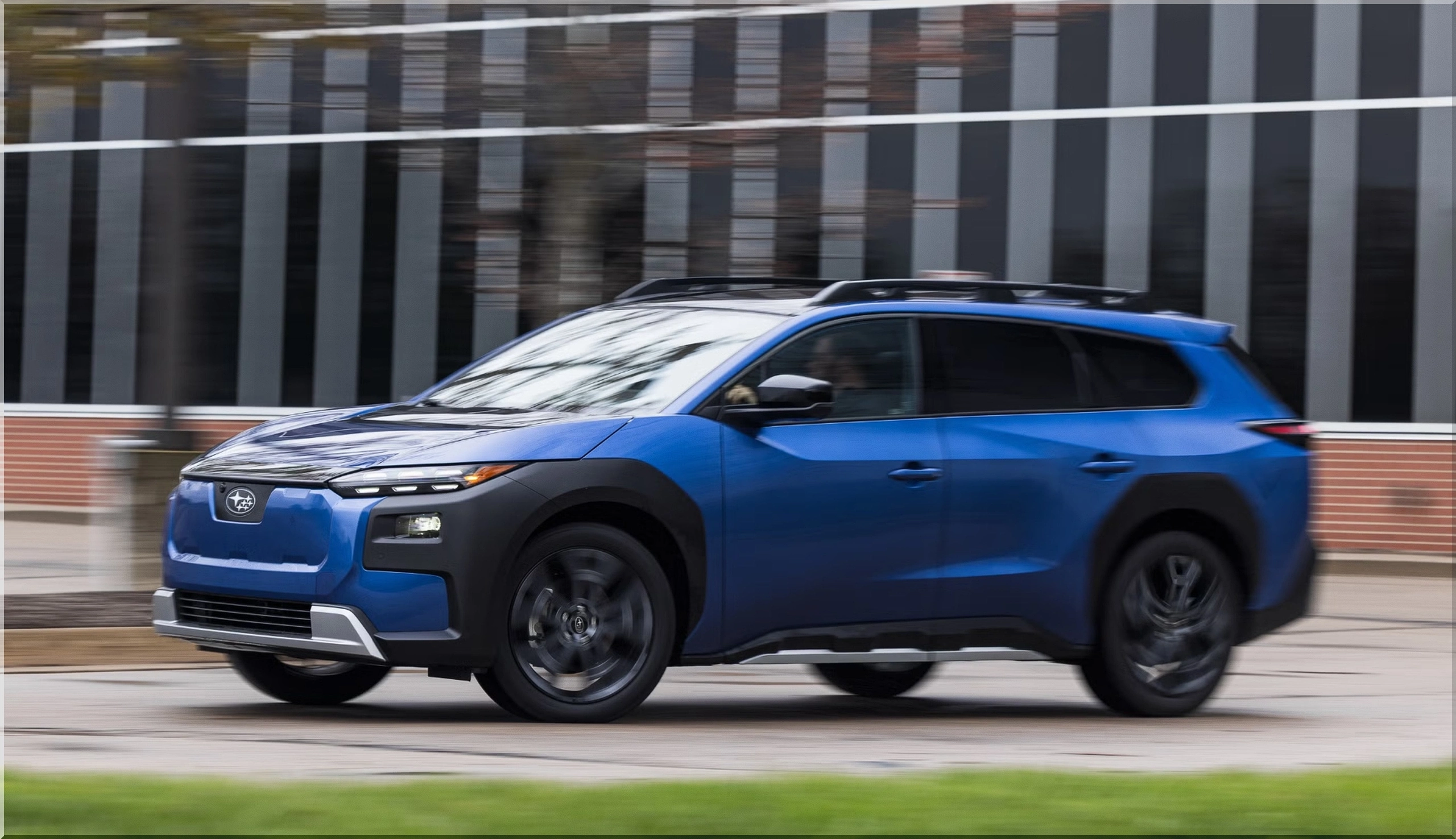
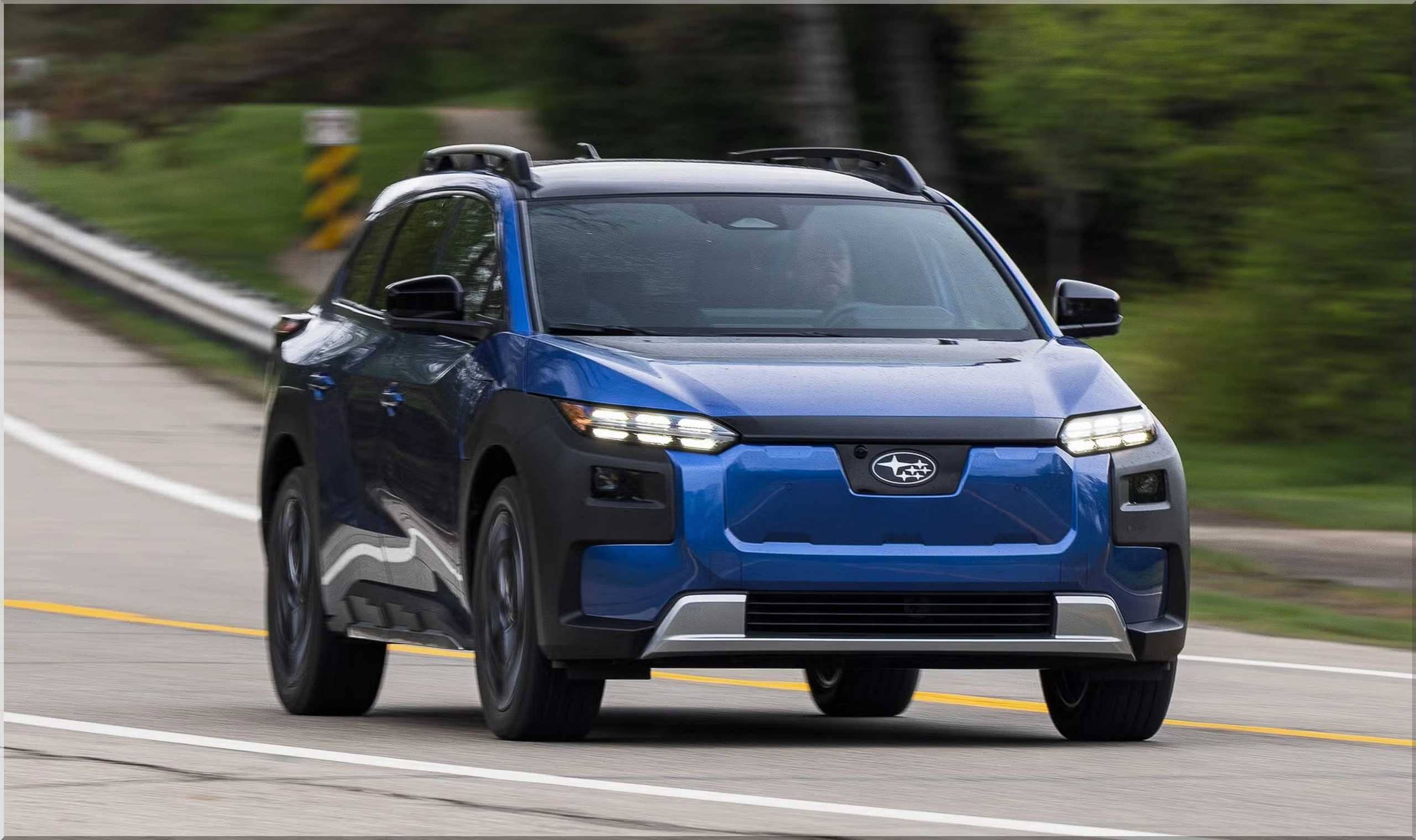
Two new electric off-road SUVs land for 2027, and neither plays it safe. The 2027 Toyota bZ Woodland transforms Toyota’s battery-electric family into a lifted, knobby-tired adventurer. The 2027 Subaru Trailseeker replaces the internal-combustion Outback with a dedicated electric platform, aiming to keep Subaru’s all-terrain dominance intact.
On paper, both deliver dual-motor all-wheel drive, elevated ground clearance, and enough torque to clamber over loose rock. But the way each brand engineers grip, range, and utility splits these two far apart. This head-to-head comparison digs into granular specs, off-road hardware, pricing, and the strategic choices that define the next wave of electric off-road vehicles.
Powertrain and Performance: Direct Drive, No Gears
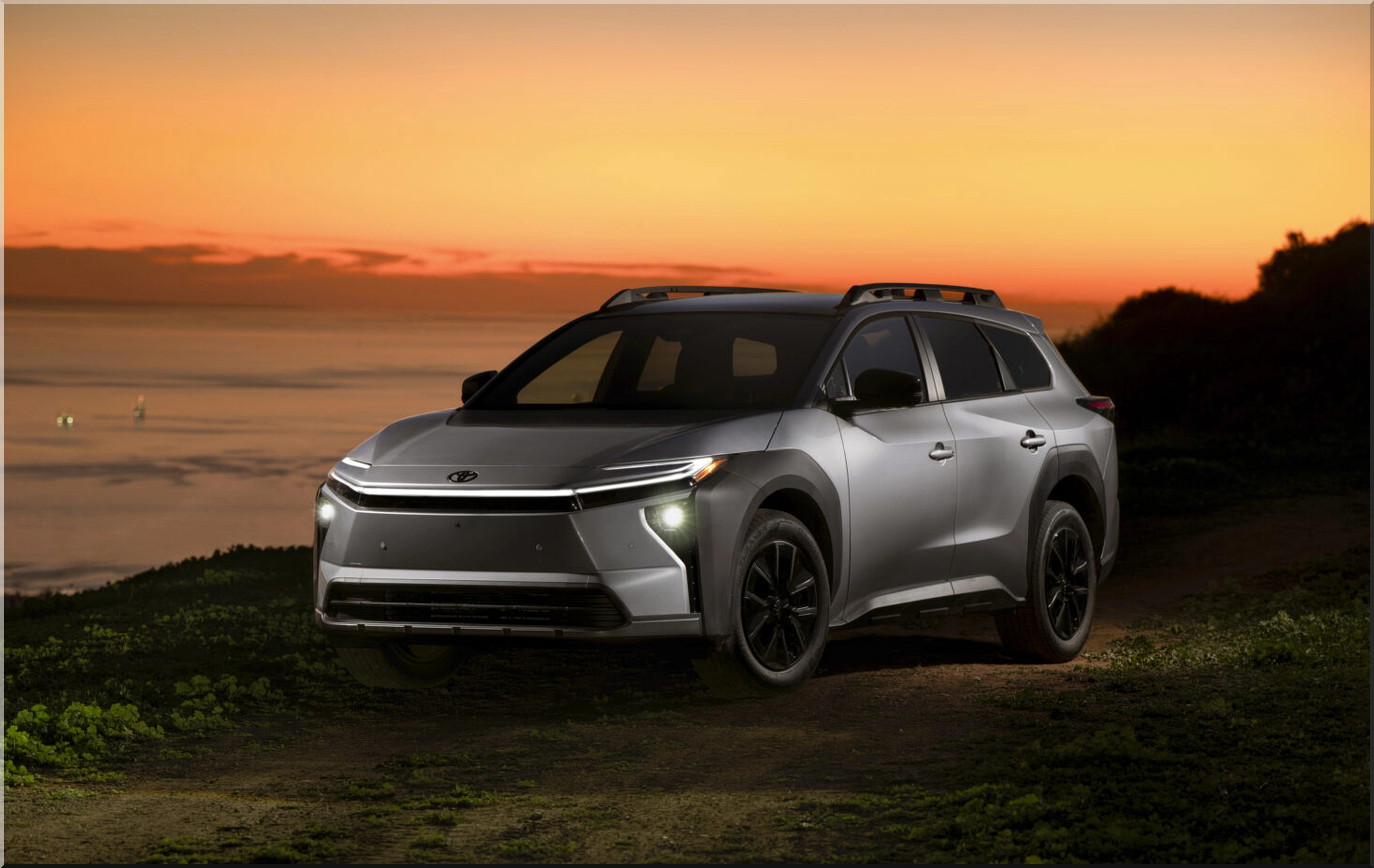
Both SUVs bolt an electric motor to each axle, creating permanent electric AWD with instant torque delivery. The Toyota bZ Woodland employs an uprated version of the e-TNGA platform’s dual-motor setup. Front and rear motors combine for 228 horsepower and 281 pound-feet of torque. Toyota routes that twist through open differentials, then leans on brake-based torque vectoring when wheels slip. A 72.8-kilowatt-hour lithium-ion battery pack supplies energy, netting an EPA-estimated 235 miles of range. The pack accepts up to 150 kilowatts of DC fast charging, jumping from 10 to 80 percent state of charge in 30 minutes.
The Subaru Trailseeker punches a little harder. Its twin-motor symmetrical all-wheel drive system delivers 250 horsepower and 290 pound-feet of torque. Subaru builds the motors directly into the axles, a design that reduces driveline lash and improves power delivery precision when crawling. The 75.0-kilowatt-hour battery (usable capacity) pushes the EPA range to 262 miles. DC fast charging also peaks at 150 kilowatts, but a slightly different charging curve means the 10-to-80-percent top-up takes 33 minutes. Subaru’s thermal management for the battery includes a dedicated chiller that activates during repeated high-load off-road use, preventing power fade on long climbs.
By comparison, the Toyota trades outright thrust for a smoother on-road demeanor. The bZ Woodland accelerates from 0 to 60 mph in 6.4 seconds. The Trailseeker reaches the same speed in 6.0 seconds. That half-second gap becomes noticeable when you merge onto a fast highway, where the Subaru’s additional 9 pound-feet of torque shoves you into gaps with less effort.
Pro-Tip: If you frequently tow a small trailer or carry a hitch-mounted bike rack, check the receiver rating. The Trailseeker’s 2,000-pound towing capacity easily handles two dirt bikes or a teardrop camper. The bZ Woodland tops out at 1,500 pounds, limiting trailer options.
Powertrain Specs at a Glance
| Spec | 2027 Toyota bZ Woodland AWD | 2027 Subaru Trailseeker AWD |
|---|---|---|
| Horsepower | 228 hp | 250 hp |
| Torque | 281 lb-ft | 290 lb-ft |
| 0–60 mph | 6.4 sec | 6.0 sec |
| Battery capacity (usable) | 72.8 kWh | 75.0 kWh |
| EPA range | 235 miles | 262 miles |
| Peak DC fast charging | 150 kW | 150 kW |
| 10–80% charge time | 30 min | 33 min |
| Max towing capacity | 1,500 lbs | 2,000 lbs |
Off-Road Hardware: Angles, Clearance, and Electronic Brains
Neither vehicle pretends to be a rock crawler, but both provide more capability than a standard crossover. Toyota lifts the bZ Woodland’s ride height by 1.2 inches over the standard bZ4X, yielding 8.3 inches of ground clearance. The approach angle sits at 21.0 degrees, the departure angle at 30.0 degrees, and breakover at 17.0 degrees. Toyota fits 235/55R19 all-terrain tires on unique alloy wheels and adds a front skid plate made of stamped aluminum. A new Trail Mode tweaks throttle response and relaxes traction control thresholds. The system can send up to 80 percent of torque to the rear axle when the front tires lose grip, although it lacks a true low-range function.
Subaru counters with 8.7 inches of ground clearance, matching the outgoing Outback Wilderness. The Trailseeker measures a 19.5-degree approach angle, 27.0-degree departure angle, and an 18.5-degree breakover angle. The approach angle trails the Toyota by 1.5 degrees because of the Subaru’s longer front overhang, yet the shorter 108.1-inch wheelbase (versus 112.2 inches for the Toyota) gives it a better breakover figure.
Subaru wraps 225/55R18 all-terrain tires around smaller wheels with thicker sidewalls, an advantage when airing down for sand or snow. Dual-function X-Mode now includes Snow/Dirt and Deep Snow/Mud settings, each remapping motor torque, brake intervention, and throttle pedal sensitivity. Front, engine, and rear differential skid plates come standard.
Looking at the data, Subaru’s hardware edges ahead in soft terrain. The extra 0.4 inch of clearance and shorter wheelbase let the Trailseeker clear obstacles that might snag the Toyota’s belly.
However, the bZ Woodland’s steeper approach angle helps it climb ledges without scraping the front bumper. Both vehicles lack a locking differential, relying instead on electronic brake-based torque distribution. In real-world mud, the Subaru’s deeper sidewall tires and more aggressive X-Mode calibration provide more forward bite before the electronics intervene.
Off-Road Specs
| Measurement | 2027 Toyota bZ Woodland | 2027 Subaru Trailseeker |
|---|---|---|
| Ground clearance | 8.3 in | 8.7 in |
| Approach angle | 21.0 deg | 19.5 deg |
| Departure angle | 30.0 deg | 27.0 deg |
| Breakover angle | 17.0 deg | 18.5 deg |
| Wheelbase | 112.2 in | 108.1 in |
| Standard tire size | 235/55R19 | 225/55R18 |
| Skid plates | Front only | Front, engine, rear diff |
| Off-road drive modes | Trail Mode | X-Mode (Snow/Dirt, Deep Snow/Mud) |
Interior, Cargo, and Technology: Two Different Cabins
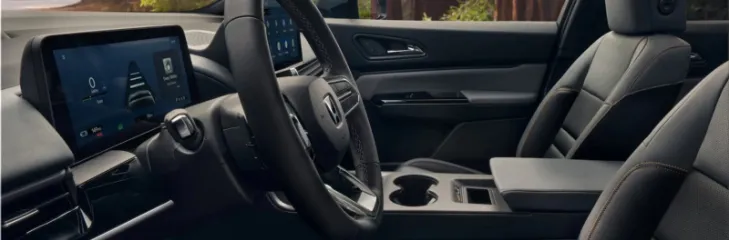
Toyota designs the bZ Woodland’s interior around a low, open dashboard and a 12.3-inch central touchscreen. Physical climate controls sit below the screen, while a digital instrument panel sits high in the driver’s line of sight. The front seats use SofTex upholstery with contrast stitching, and the rear bench folds 60/40 to open 27.4 cubic feet of cargo space behind the second row. Fold the seats flat and the volume grows to 56.1 cubic feet. Toyota’s latest infotainment system provides wireless Apple CarPlay and Android Auto, plus a cloud-based navigation that factors in elevation changes and predicted battery state.
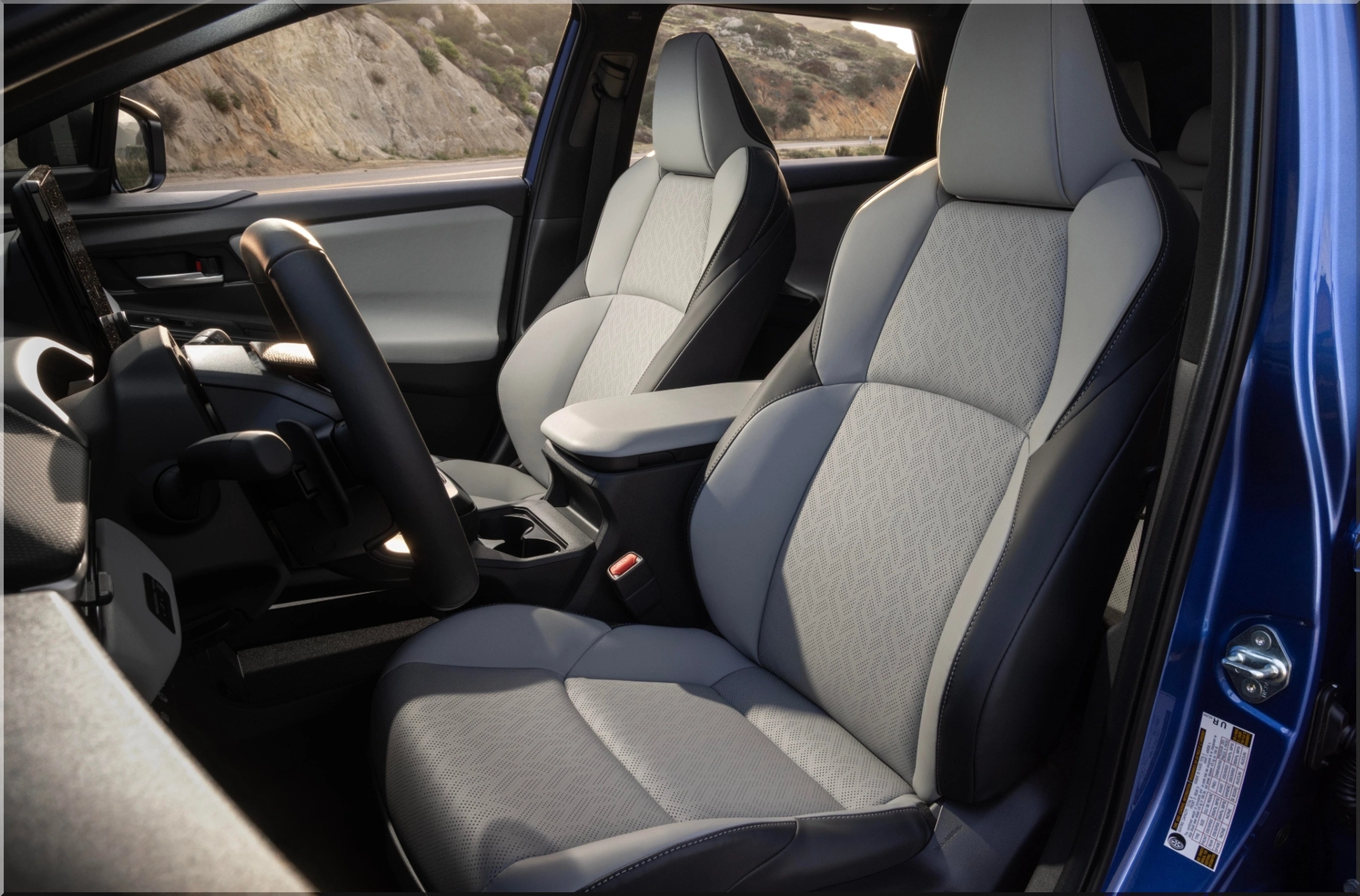
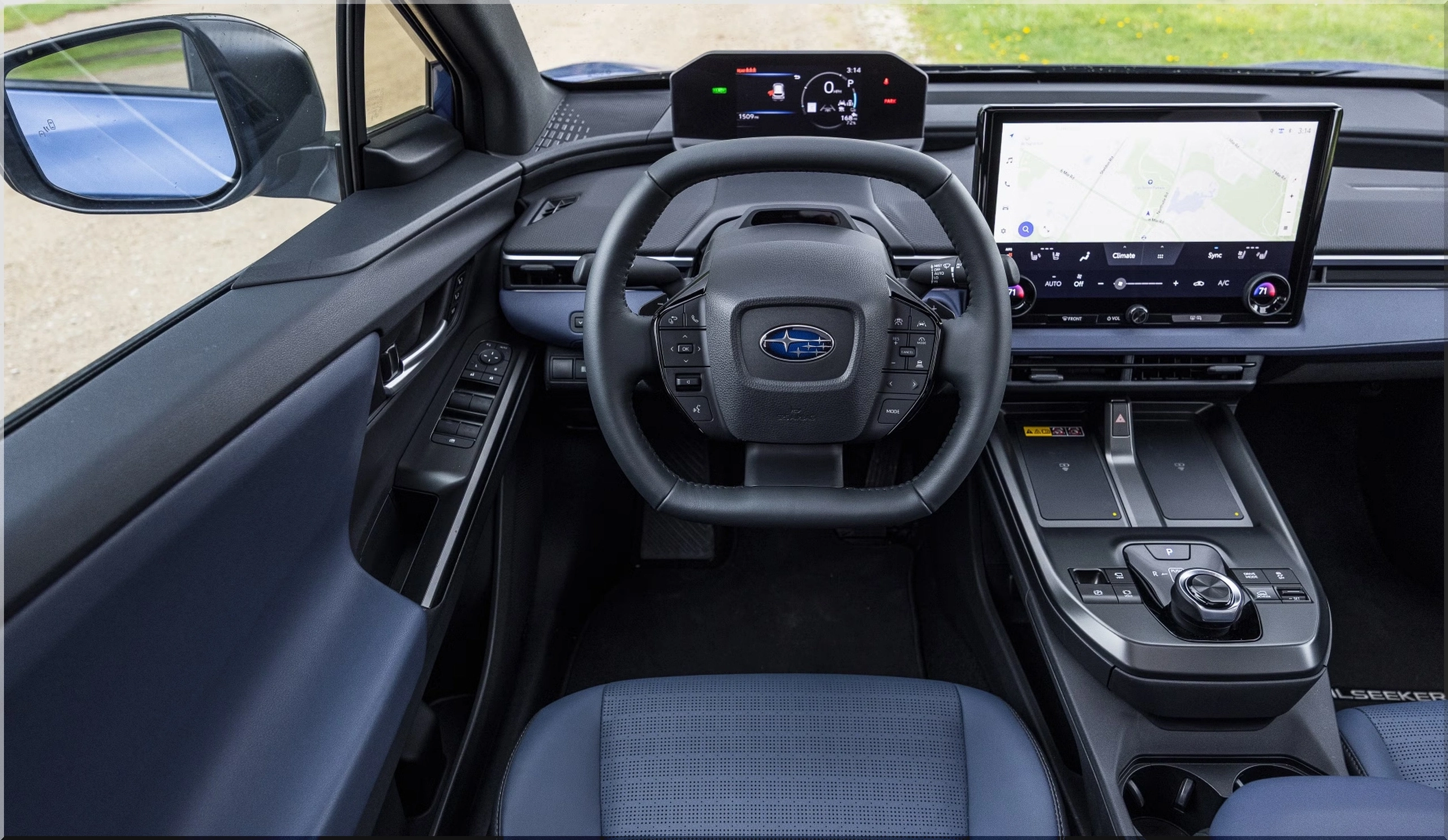
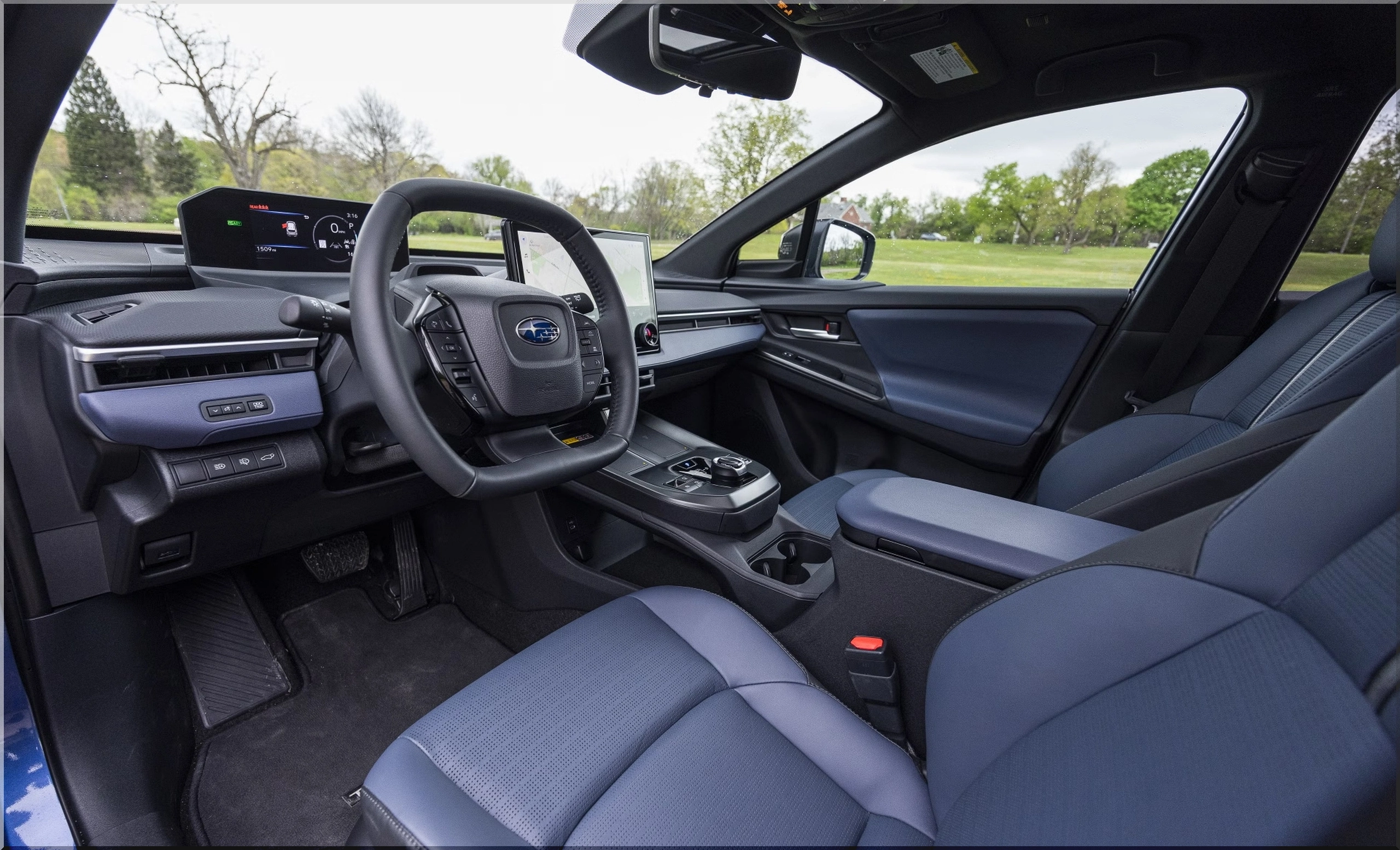
The Subaru Trailseeker goes a different direction. An 11.6-inch vertically oriented touchscreen dominates the center stack, still paired with physical knobs for volume and tuning. Subaru stretches the wheelbase to create 32.5 cubic feet of cargo capacity behind the rear seats — a full 5.1 cubes more than the Toyota — and 64.2 cubic feet with the seats folded. The rear seat legroom hits 39.0 inches, besting the Toyota by 1.3 inches. Subaru’s StarTex water-repellent upholstery, available on the Wilderness trim, simplifies cleaning after muddy hikes. The Trailseeker also offers a standard roof rack with integrated crossbars that flip out to hold up to 200 pounds of dynamic load — a detail that eliminates the need for aftermarket towers.
In addition, Subaru’s driver-assistance system, EyeSight, now works during off-road driving at speeds up to 25 mph, using the front camera and radar to detect obstacles in tall grass. Toyota’s Safety Sense 3.0 suite includes a similar pre-collision system but does not adapt its logic for low-speed trail use. Both vehicles offer a heat pump for efficient cabin heating, though the Subaru’s pump draws less energy in freezing temperatures, preserving more range.
Cargo and Passenger Space
| Dimension | 2027 Toyota bZ Woodland | 2027 Subaru Trailseeker |
|---|---|---|
| Cargo volume (rear seats up) | 27.4 cu ft | 32.5 cu ft |
| Cargo volume (seats folded) | 56.1 cu ft | 64.2 cu ft |
| Rear legroom | 37.7 in | 39.0 in |
| Maximum roof load (dynamic) | Not rated | 200 lbs |
| Standard infotainment screen | 12.3 in | 11.6 in |
Pricing and Value: Equipment That Matters
The 2027 Toyota bZ Woodland arrives in a single well-equipped trim. The base price starts at $45,000, including the destination fee. That money buys the dual-motor AWD powertrain, the lift kit, all-terrain tires, skid plate, LED fog lights, heated front seats, heated steering wheel, and a 12.3-inch touchscreen. A Weather Package adds heated rear seats and a heated windshield wiper park for $800. Toyota charges $1,200 for the premium JBL audio system.
Subaru structures the Trailseeker line in three trims. The base Premium starts at $43,995. Moving to the Limited trim at $48,500 adds leather upholstery, a sunroof, and a 12-speaker Harman Kardon audio system. The range-topping Wilderness trim lists for $50,995 and includes an additional 0.4 inches of ground clearance (9.1 inches total), an off-road-tuned suspension with longer travel, all-terrain tires on 17-inch wheels, front and rear skid plates, and a full-size spare tire that mounts inside the cargo area. Subaru also equips the Wilderness with a 360-degree camera system that projects a transparent view under the vehicle at trail speeds.
Consequently, the Subaru Trailseeker Premium undercuts the Toyota by $1,005 while delivering more range, more cargo room, and a higher towing capacity. The bZ Woodland fights back with a more generous standard equipment list — heated seats and steering wheel are standard, not optional — and a slightly faster charging curve. Value-conscious buyers who need maximum interior space and plan to tow will likely prefer the Subaru.
Driving Impressions: On-Road Comfort and Trail Confidence
Push the bZ Woodland’s accelerator on pavement, and the cabin stays quiet. Toyota tuned the suspension for compliance, so expansion joints and broken asphalt pass underneath with muted thumps. The steering feels light but accurate, and the regenerative braking, adjustable via steering-wheel paddles, adds up to 0.25 g of deceleration without touching the friction brakes. Off-road, the Toyota’s tall sidewall tires and Trail Mode encourage you to carry speed over washboard surfaces. The system brakes the spinning wheel quickly, but the lack of a dedicated deep-snow setting means the driver must manage throttle on slick inclines.
The Subaru Trailseeker feels tauter on the road. Its suspension cycles more quickly over bumps, transmitting a subtle jiggle into the cabin at highway speeds. That firmer tune pays dividends when the pavement ends. X-Mode’s Deep Snow/Mud setting allows enough wheelspin to clear mud from the tire treads before applying the brake, a strategy that maintains forward momentum. The shorter wheelbase makes the Trailseeker more maneuverable between trees, and the additional skid plates allow the driver to accept minor underbody contact without worry. At crawling speeds, the electric motors deliver torque in a silky, surge-free stream that mimics a low-range transfer case.
Both vehicles suffer from the same limitation: a lack of aggressive all-terrain tires from the factory. The Toyota’s Yokohama Geolandar G91s and the Subaru’s Bridgestone Duelers give up grip in deep mud compared to dedicated off-road rubber. Budget for a set of BFGoodrich Trail-Terrains or Falken Wildpeak A/T Trails if you plan frequent trail work.
Competitive Landscape: Where They Fit Among Off-Road EVs
The bZ Woodland and Trailseeker enter a segment that’s rapidly filling with electric off-road SUV options. The table below frames how these two vehicles compare against three high-profile rivals on price, power, range, and off-road credentials.
Off-Road EV Comparison
| Model | Starting Price (USD) | Horsepower | EPA Range | Ground Clearance | Key Off-Road Feature |
|---|---|---|---|---|---|
| 2027 Toyota bZ Woodland | $45,000 | 228 hp | 235 mi | 8.3 in | Trail Mode, front skid plate |
| 2027 Subaru Trailseeker Premium | $43,995 | 250 hp | 262 mi | 8.7 in | Dual X-Mode, multi-plate skids |
| 2027 Rivian R2 (Dual Motor) | $47,000 (est.) | 533 hp | 300+ mi | 9.8 in | Locking rear differential, air suspension |
| 2026 Ford Mustang Mach-E Rally | $65,000 | 480 hp | 250 mi | 7.9 in | Rally-tuned magneride, lift kit |
| 2027 Jeep Recon | $49,995 (est.) | 400 hp | 280 mi | 10.0 in | Selec-Terrain, removable doors |
From an expert perspective, the Rivian R2 and Jeep Recon promise far greater off-road performance thanks to locking differentials, superior articulation, and taller ground clearance. The Toyota and Subaru instead balance everyday comfort with weekend trail capability at a lower price point. The Mustang Mach-E Rally delivers more speed but sits lower and costs substantially more.
Pro-Tips: Which Electric SUV Should You Buy?
Choose the Toyota bZ Woodland if: You value standard heated seats and wheel, a faster 30-minute fast-charge stop, and a steeper approach angle. The single-trim simplicity means you never pay extra for all-terrain equipment.
Choose the Subaru Trailseeker if: You need more cargo volume, a longer driving range, the ability to tow 2,000 pounds, or the deeper off-road capability of a Wilderness trim with 9.1 inches of ground clearance. The standard roof crossbars and larger rear legroom tip the balance for families with outdoor gear.
Both electric SUVs prove that electrification doesn’t mean giving up dirt-road fun. The deciding factors boil down to how much space you haul, how far you roam between chargers, and whether you need the absolute most ground clearance money can buy under $51,000.

- Log in to post comments