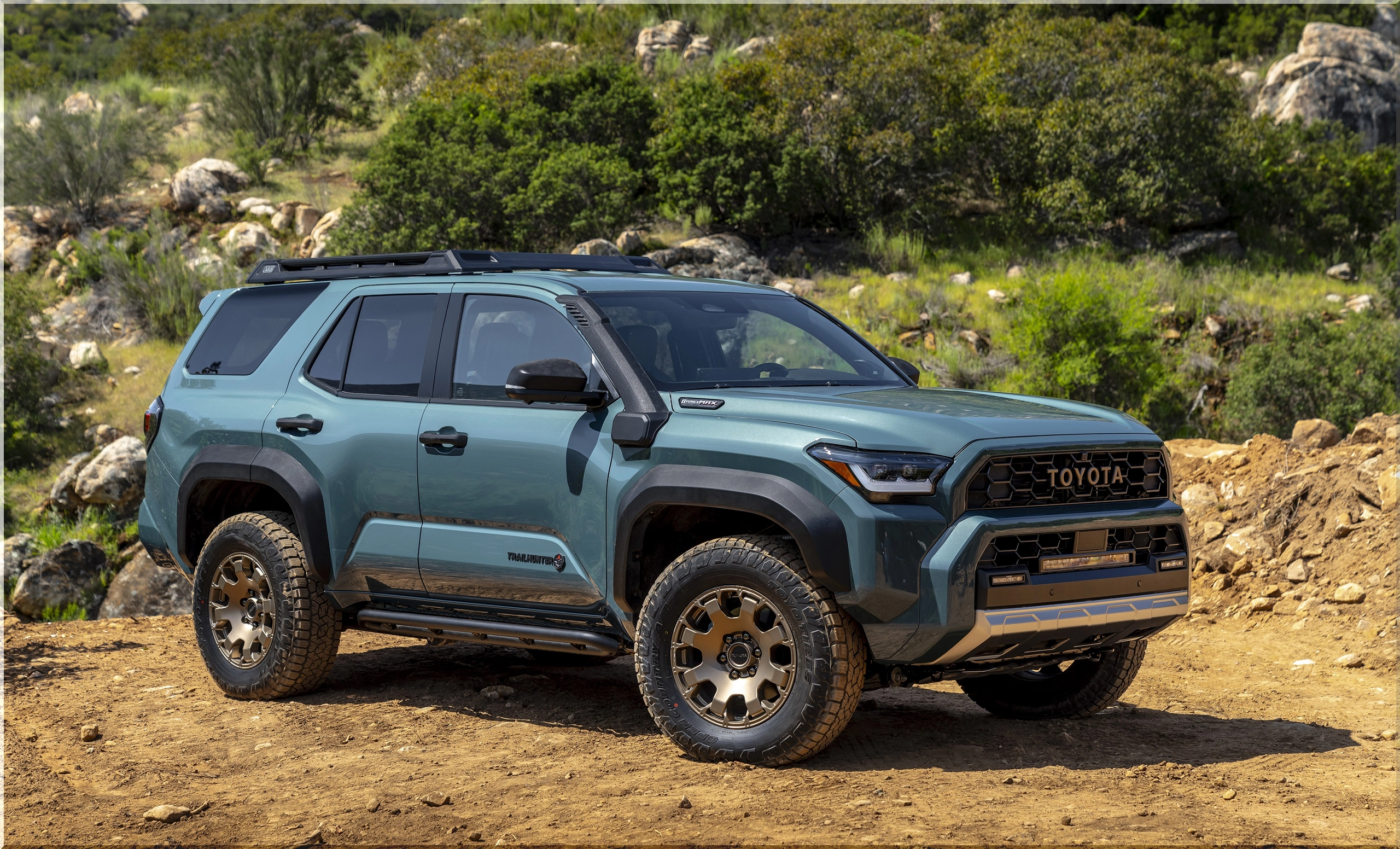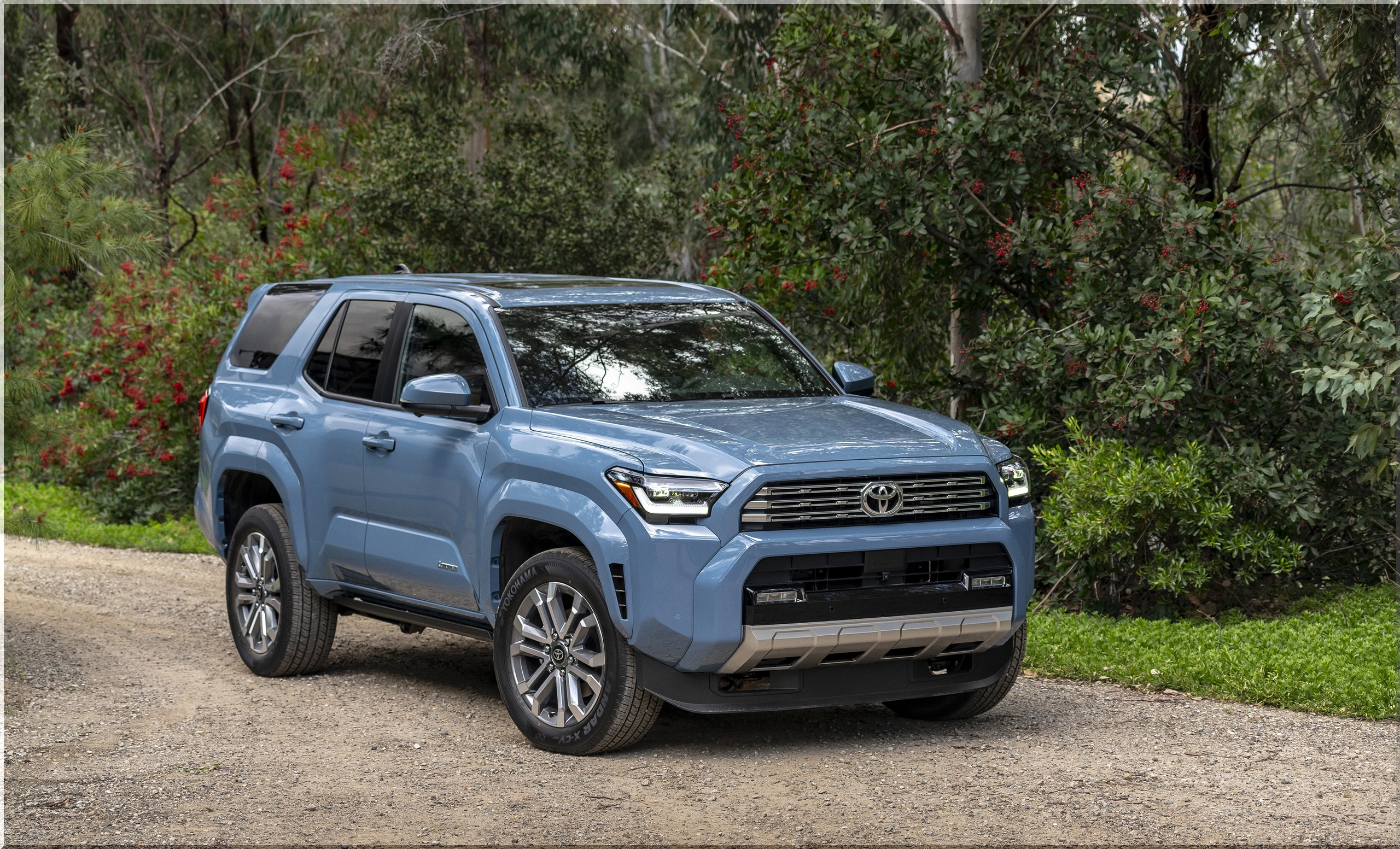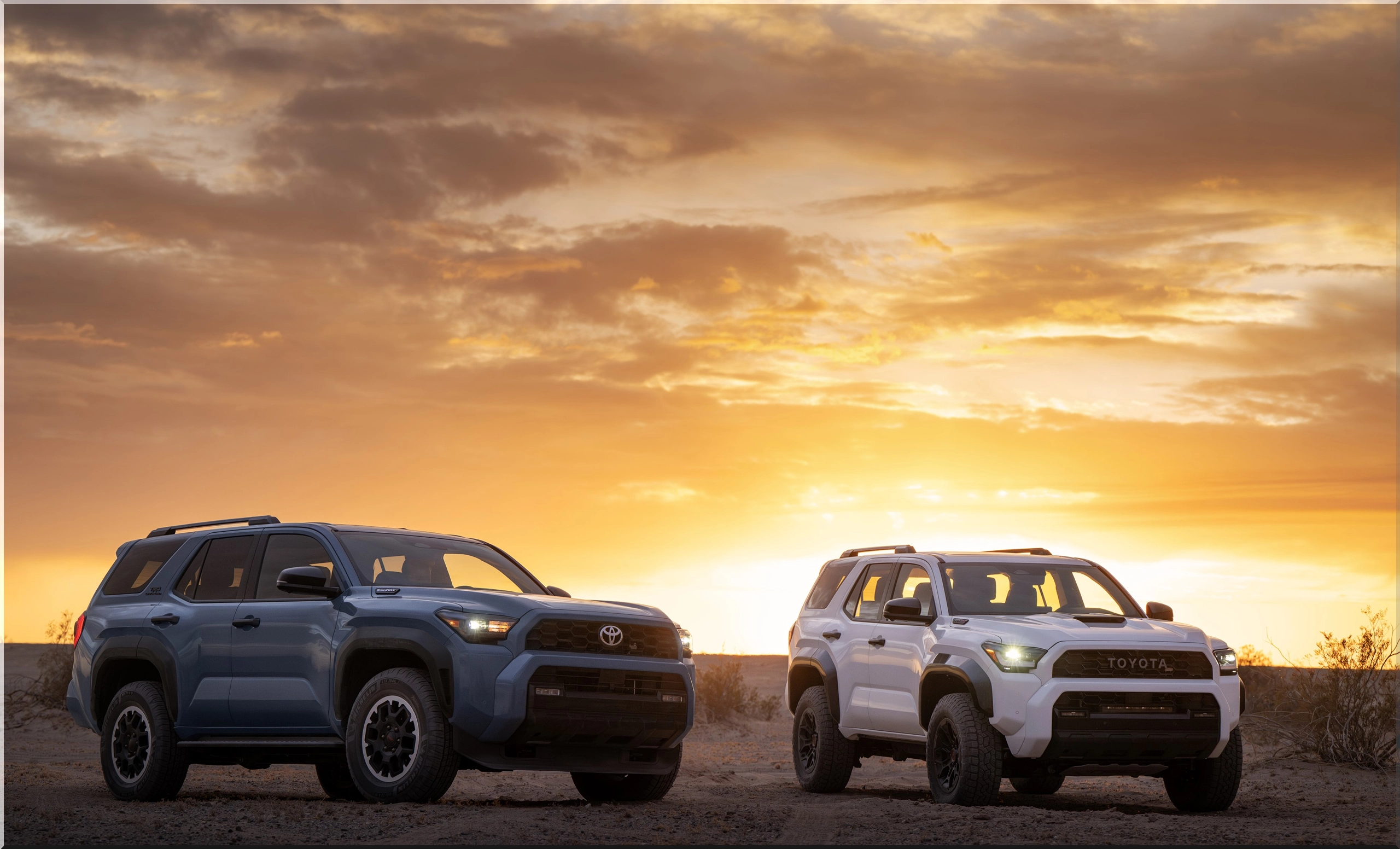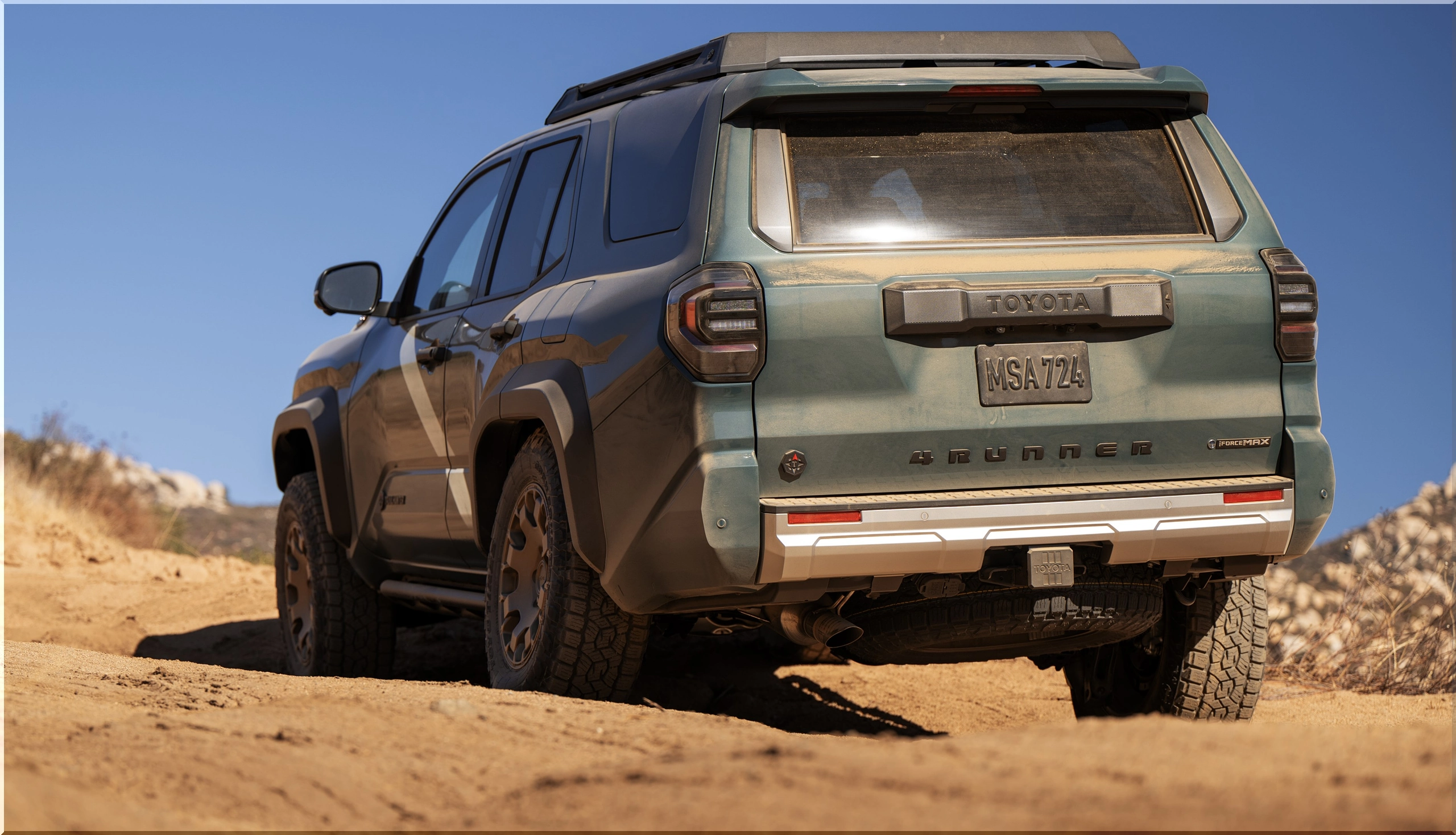

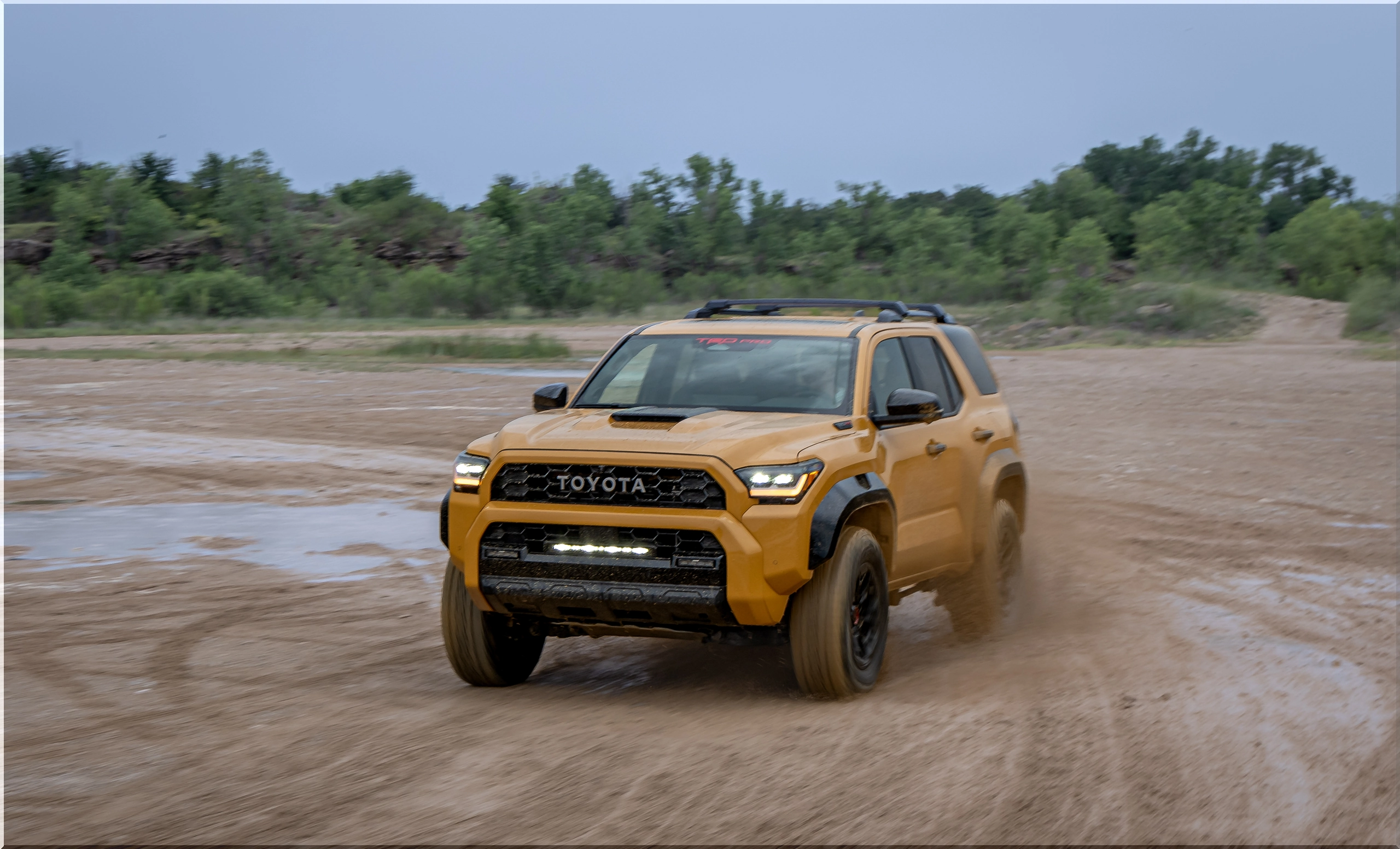
The 2027 Toyota 4Runner starts at $43,490, with heated seats and eight-way power adjustment for both front occupants now standard. Toyota still supplies the equipment for climbing over rocks. This year's most welcome change may happen before anyone leaves the driveway.
The choices span turbocharged gas power, an i-FORCE MAX hybrid, two- or four-wheel drive and several suspension packages. Prices reach $68,870 before delivery and options, so the buying decision deserves more attention than choosing whichever paint looks most adventurous beside a supermarket.
Image
What's New for the 2027 4Runner?
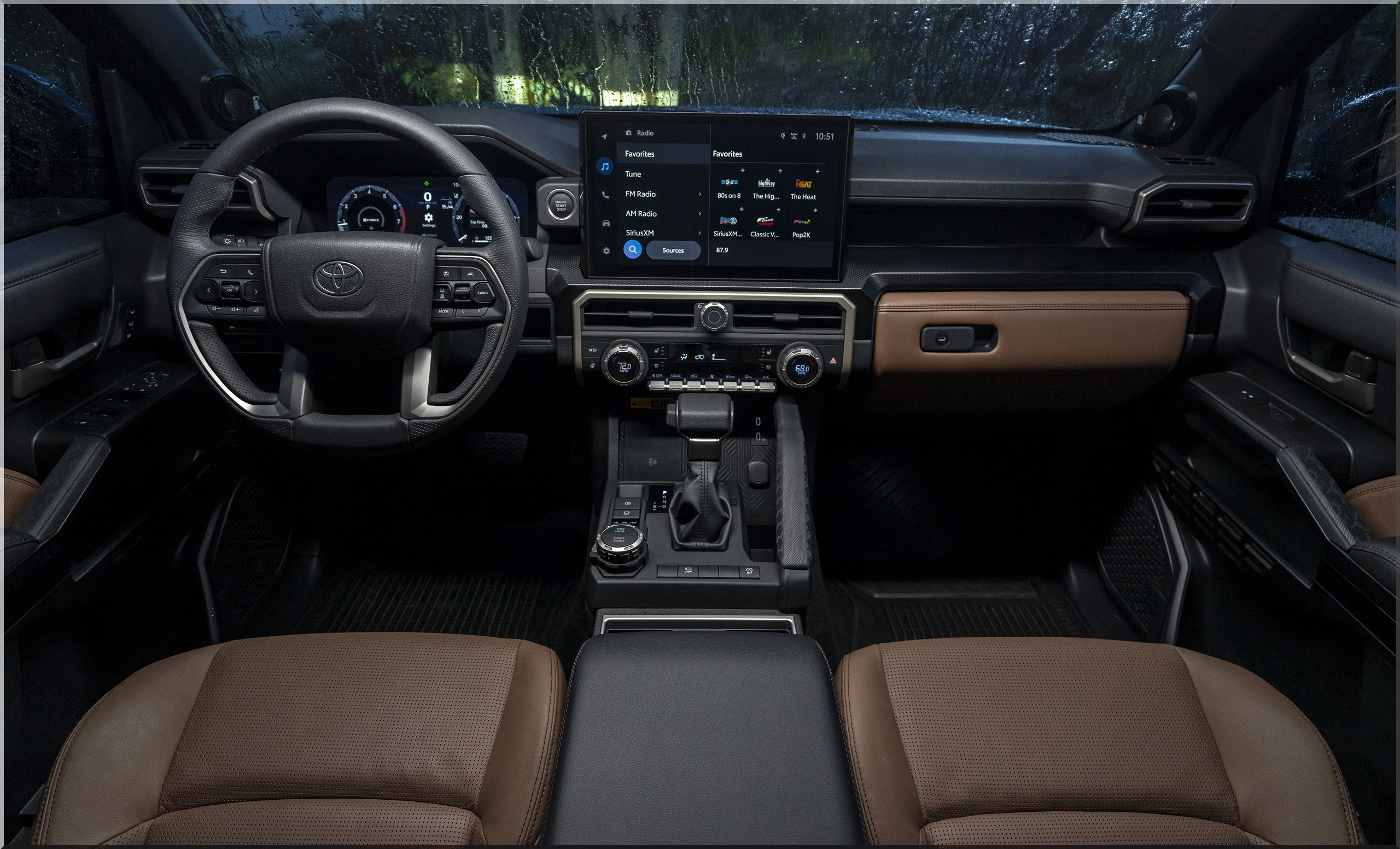
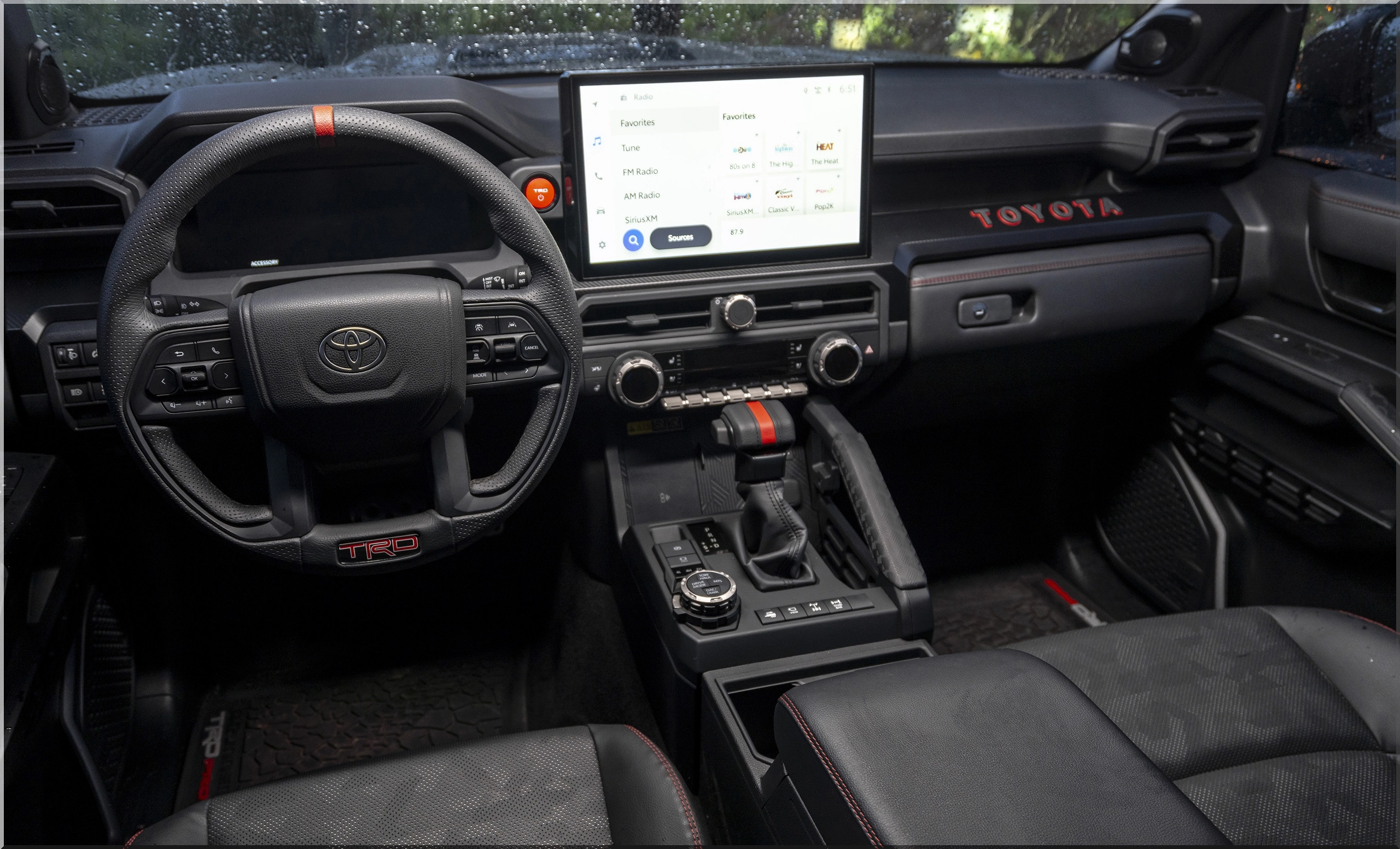
SR5, TRD Sport and TRD Off-Road gain power adjustment for both front seats, while SR5 also gains standard front-seat heating. The passenger receives as many adjustment directions as the driver, a small diplomatic victory for whoever usually handles navigation.
Other changes address appearance and trail preparation:
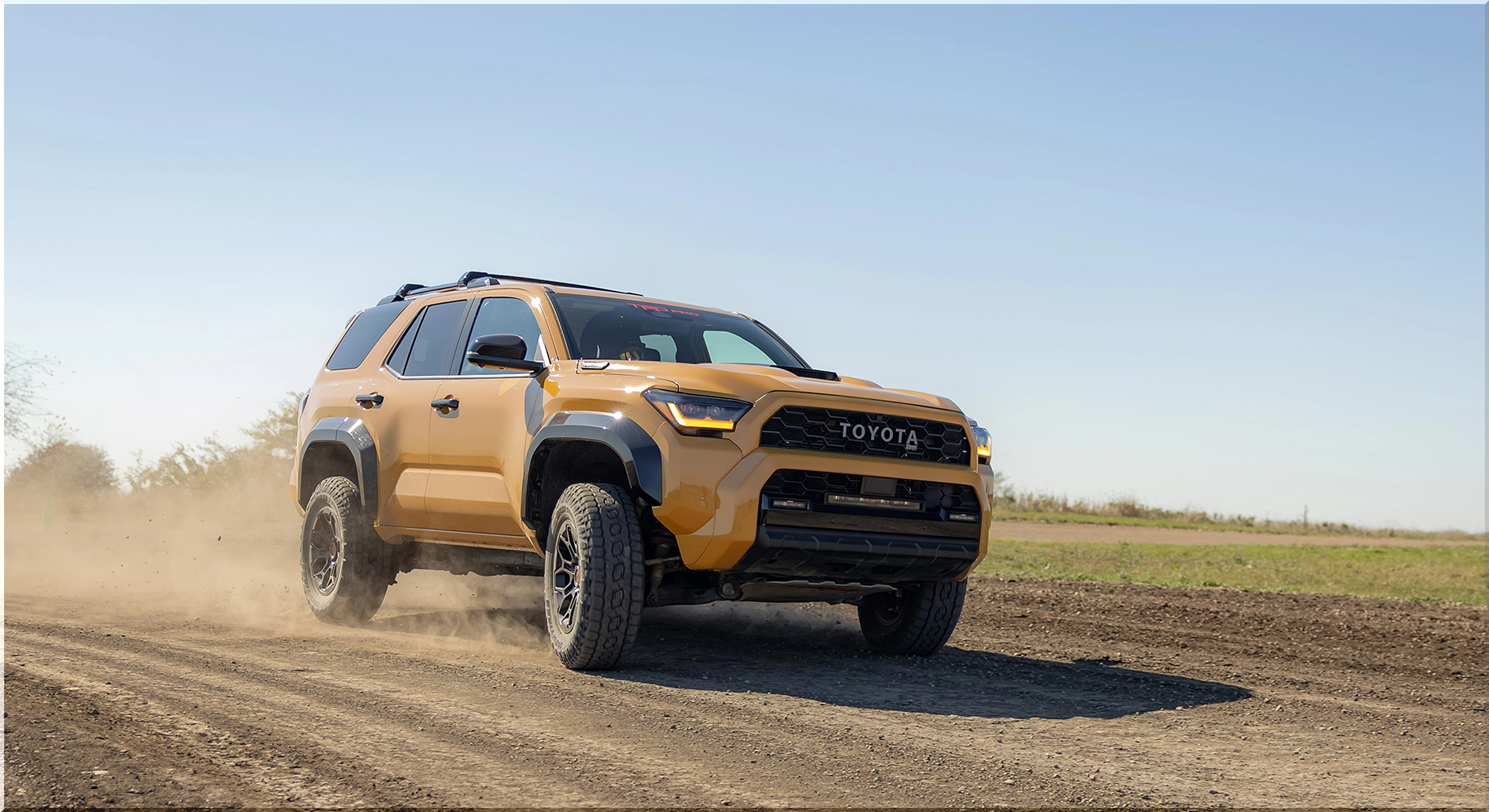
- TRD Pro gains standard red front recovery hooks and exclusive Hot Honey paint.
- Inked replaces Black across the color range.
- TRD Off-Road gains frame weld nuts for installing Toyota accessory rock rails after production.
- Platinum adds front-door puddle lamps that project the 4Runner logo.
Rock rails protect the lower body from trail obstacles, making the mounting provision useful for later upgrades. The puddle lamps perform another service: identifying the vehicle you presumably remember parking.
2027 Toyota 4Runner Prices and Trim Levels
Toyota offers nine grade names, with additional hybrid variants. These 2027 Toyota 4Runner prices exclude delivery, taxes, options and accessories. Gas SR5, TRD Sport, TRD Sport Premium and Limited prices start with rear-wheel drive.
| Trim | Starting MSRP | Equipment that explains the price |
|---|---|---|
| SR5 | $43,490 | Heated power front seats; optional third row |
| TRD Sport | $49,620 | Sport-tuned suspension; 20-inch wheels |
| TRD Sport Premium | $54,300 | Ventilated front seats; 14-inch display |
| TRD Off-Road | $51,560 gas / $54,360 hybrid | Locking rear differential; trail controls |
| TRD Off-Road Premium | $56,660 gas / $59,460 hybrid | Additional cabin equipment and trail technology |
| Limited | $57,090 gas / $61,890 hybrid | Leather seating; adaptive suspension |
| Platinum | $64,850 | Hybrid drivetrain; additional luxury equipment |
| Trailhunter | $68,590 | Expedition suspension and underbody protection |
| TRD Pro | $68,870 | FOX suspension and performance trail equipment |
An SR5 4WD starts at $45,490, or $2,000 above the rear-drive model. Compare matching drivetrains across trims; two wheels that never receive engine power can explain part of a cheaper vehicle's price advantage.
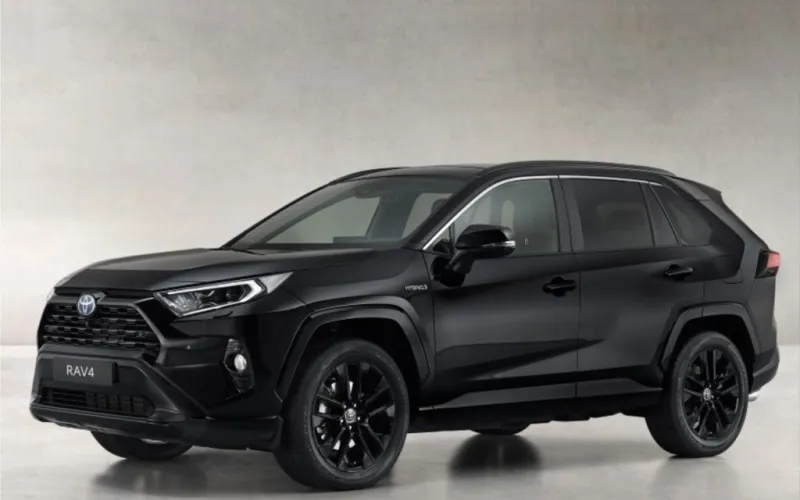
For another Toyota SUV, compare the RAV4's hybrid variants.
Image
Gas vs. Hybrid Power
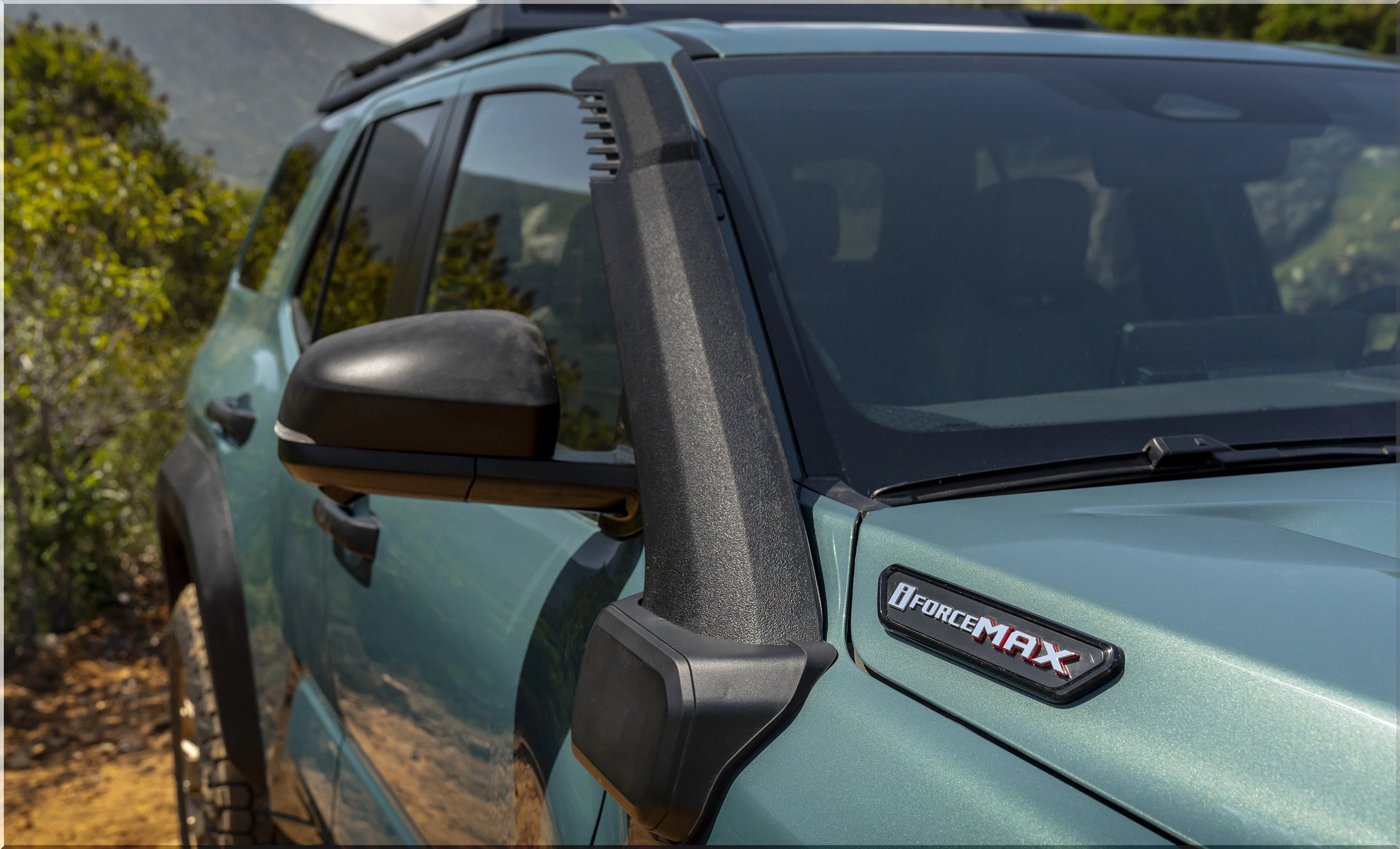
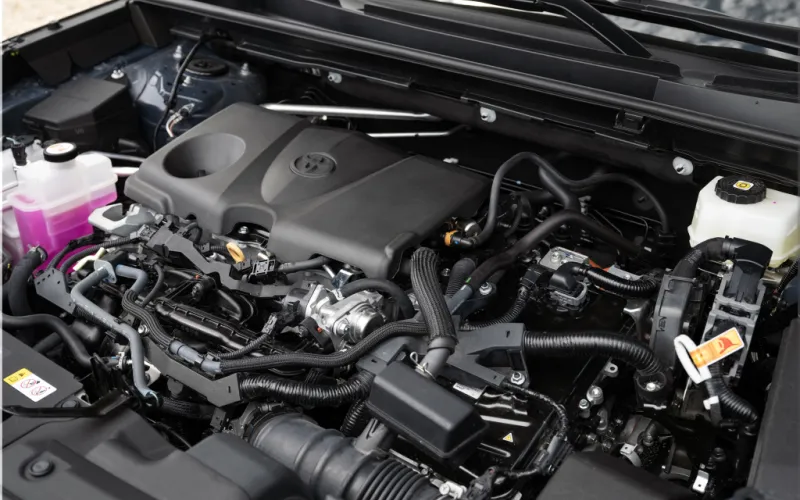
Both powertrains use a 2,393-cc turbocharged four-cylinder and an eight-speed automatic. The gas engine produces 278 hp and 317 lb-ft; hybrid output reaches up to 326 hp and 465 lb-ft. The headline figures represent approximately 17% more horsepower and 47% more torque.
| Powertrain specification | i-FORCE gas | i-FORCE MAX hybrid |
|---|---|---|
| Engine displacement | 2.4 liters | 2.4 liters |
| Maximum horsepower | 278 hp at 6,000 rpm | Up to 326 hp at 6,000 rpm |
| Peak torque | 317 lb-ft at 1,700 rpm | 465 lb-ft at 1,700 rpm |
| Gearbox | Eight-speed automatic | Eight-speed automatic |
| Electric motor output | None | 48 hp; 184 lb-ft |
| TRD Off-Road estimated city/highway/combined economy | 19/25/21 mpg | 23/24/23 mpg |
Trailhunter carries a 323-hp rating, so the hybrid's headline horsepower does not apply to every grade. Engine and motor torque also peak under different conditions. Adding their individual figures produces a number Toyota never promises the complete system will deliver.
The engine combines an 87.5-mm bore, 99.5-mm stroke and 11.0:1 compression ratio. Its twin-scroll turbocharger separates exhaust pulses before the turbine, preserving pulse energy to help response. While exhaust flow builds boost, the transmission-mounted electric motor supplies additional pulling force to move a loaded SUV from low speed.
Suspension and Four-Wheel-Drive Hardware
The TNGA-F truck platform combines a boxed steel ladder frame with independent double-wishbone front suspension and a coil-sprung, multi-link rear suspension. The front wheels can respond separately to bumps, while the rear axle and locating links manage load and movement.
The trail trims divide their work this way:
- TRD Off-Road: Bilstein monotube shocks address mixed road and trail driving.
- TRD Pro: FOX 2.5-inch internal-bypass shocks with rear reservoirs target demanding off-road use.
- Trailhunter: Old Man Emu 2.5-inch shocks, rock rails and skid protection support expedition duties.
TRD Pro and Trailhunter use nominal 33-inch (838-mm) tires on 18-inch (457-mm) wheels. Their stabilizer disconnect allows more front suspension articulation, helping tires stay in contact across uneven ground. A tire dangling above a rock mostly offers spectators a better view of its tread.
The gas TRD Off-Road pairs a 4.41:1 first gear with 2.57:1 low range and a 3.58:1 final drive. That combination supplies approximately 40.6:1 mechanical reduction before torque-converter multiplication, helping the driver crawl slowly and control wheel movement.
Compare four-wheel drive hardware in the European Ranger Raptor.
Interior Space, Cargo Room and Screens
The 4Runner measures 194.9 inches (4,951 mm) long on a 112.2-inch (2,850-mm) wheelbase. Front legroom totals 41.8 inches (1,062 mm), with 34.8 inches (884 mm) in the second row. Bring the intended occupants to the test drive, especially when the tallest driver sits ahead of the tallest teenager.
Maximum cargo volume reaches 90.2 cubic feet with the rear seats folded; hybrid configurations offer about 82.6 cubic feet. Try your usual equipment on the actual load floor before deciding. Selected SR5 and Limited configurations offer a third row, so check the individual vehicle's seating arrangement.
The range starts with an 8-inch touchscreen, with a 14-inch display and 14-speaker JBL audio available on higher trims. Wireless Apple CarPlay and Android Auto handle phone integration. The larger display increases screen space without extending the same courtesy to rear legroom. The power rear window lets owners retrieve smaller items without opening the liftgate.
Towing Capacity and Payload
Towing capacity reaches up to 6,000 pounds across the 2027 Toyota 4Runner lineup, depending on configuration. The hybrid badge does not automatically increase that limit. Occupants, accessories, luggage and trailer tongue weight also use the SUV's payload allowance.
Add 600 pounds of tongue weight, 700 pounds of occupants and 200 pounds of luggage, and the total reaches 1,500 pounds before extra hitch equipment. The towing headline cannot negotiate with the payload sticker.
Before buying, check:
- The exact vehicle's trailer rating against your trailer's loaded weight.
- The door-label payload allowance against occupants, cargo, accessories and tongue weight.
- Availability of the integrated trailer brake controller and towing camera systems.
Trailer Backup Guide with Straight Path Assist helps drivers reverse. Its assistance changes neither the payload allowance nor the towing limit.
Compare the trailer rating and towing equipment in the GMC Sierra 1500 review.
4Runner vs. Bronco, Wrangler and Land Cruiser
This comparison combines 2027 Toyota figures with published 2026 Ford and Jeep specifications. Engine selection and equipment affect the numbers; each row identifies the configuration behind the claim.
| SUV and engine | Horsepower | Torque | Maximum towing |
|---|---|---|---|
| 2027 4Runner gas / hybrid | 278 / up to 326 hp | 317 / 465 lb-ft | Up to 6,000 lb across the lineup |
| 2026 Bronco 2.3-liter turbo | 300 hp | 325 lb-ft | Up to 3,500 lb |
| 2026 Wrangler four-door Rubicon 2.0-liter turbo | 270 hp | 295 lb-ft | Up to 5,000 lb |
| 2027 Land Cruiser hybrid | 326 hp | 465 lb-ft | Up to 6,000 lb |
Ford quotes these engine outputs on premium gasoline. The Bronco Raptor raises its towing ceiling to 4,500 pounds, while Jeep reserves the listed 5,000-pound rating for qualifying four-door Rubicons.
The 4Runner's maximum exceeds the selected Bronco's by 2,500 pounds and the Wrangler's by 1,000 pounds. Land Cruiser matches the Toyota towing ceiling and supplies standard full-time four-wheel drive with locking center and rear differentials.
Jeep also quotes an approach angle of up to 47.4 degrees for four-door Wranglers with available 35-inch tires. That figure describes front-bumper clearance at an obstacle, without measuring clearance beneath the vehicle's middle.
Is the 4Runner Hybrid Worth the Extra Money?
The TRD Off-Road hybrid adds $2,800 to the equivalent gas trim's price. Buyers who regularly carry passengers or equipment may appreciate the stronger low-speed pulling response. Fuel savings work on a less hurried schedule.
Pro-Tip: Calculate Fuel Savings Before Paying the Premium
At 15,000 miles annually, Toyota's estimated 21 versus 23 combined mpg and an assumed $3.50 per gallon yield about $217 in annual fuel savings. Fuel alone would recover the $2,800 premium in approximately 13 years, before financing, maintenance or resale differences enter the calculation.
Highway estimates favor the gas TRD Off-Road, 25 versus 24 mpg. Use your own driving mix in the calculation; the hybrid badge does not guarantee a smaller bill on every route.
Which 4Runner Trim Should You Choose?
Match the equipment to the driving you expect:
- SR5: Everyday use, a lower purchase price and occasional outdoor trips.
- TRD Off-Road: Regular trail use that justifies a rear differential lock and terrain controls.
- Premium trims: More cabin equipment without stepping into a flagship trail package.
- TRD Pro or Trailhunter: Frequent use of their suspension, tires and protective hardware.
Crawl Control manages throttle and braking at low speed, leaving steering to the driver. Give comfort, visibility and parking behavior the same attention during a test drive; those duties will fill plenty of ownership time.
The Nissan Frontier Sport Edition also weighs trail equipment against price and appearance.
Safety Features and Warranty Coverage
Toyota Safety Sense 3.0 includes standard adaptive cruise control, pedestrian detection, lane assistance and automatic high beams. The driver retains the supervision job.
The Mercedes-Benz C-Class coverage offers another view of adaptive cruise control.
Warranty coverage runs three years/36,000 miles for the vehicle and five years/60,000 miles for the powertrain. Covered hybrid components receive eight years/100,000 miles, with ten years/150,000 miles for the hybrid battery.
ToyotaCare covers scheduled maintenance for one year/10,000 miles and roadside assistance for two years with unlimited mileage. Read the warranty booklet and service schedule alongside the final dealer quote. Toyota includes the heated seats; making the purchase comfortable still requires a little arithmetic.
Image gallery