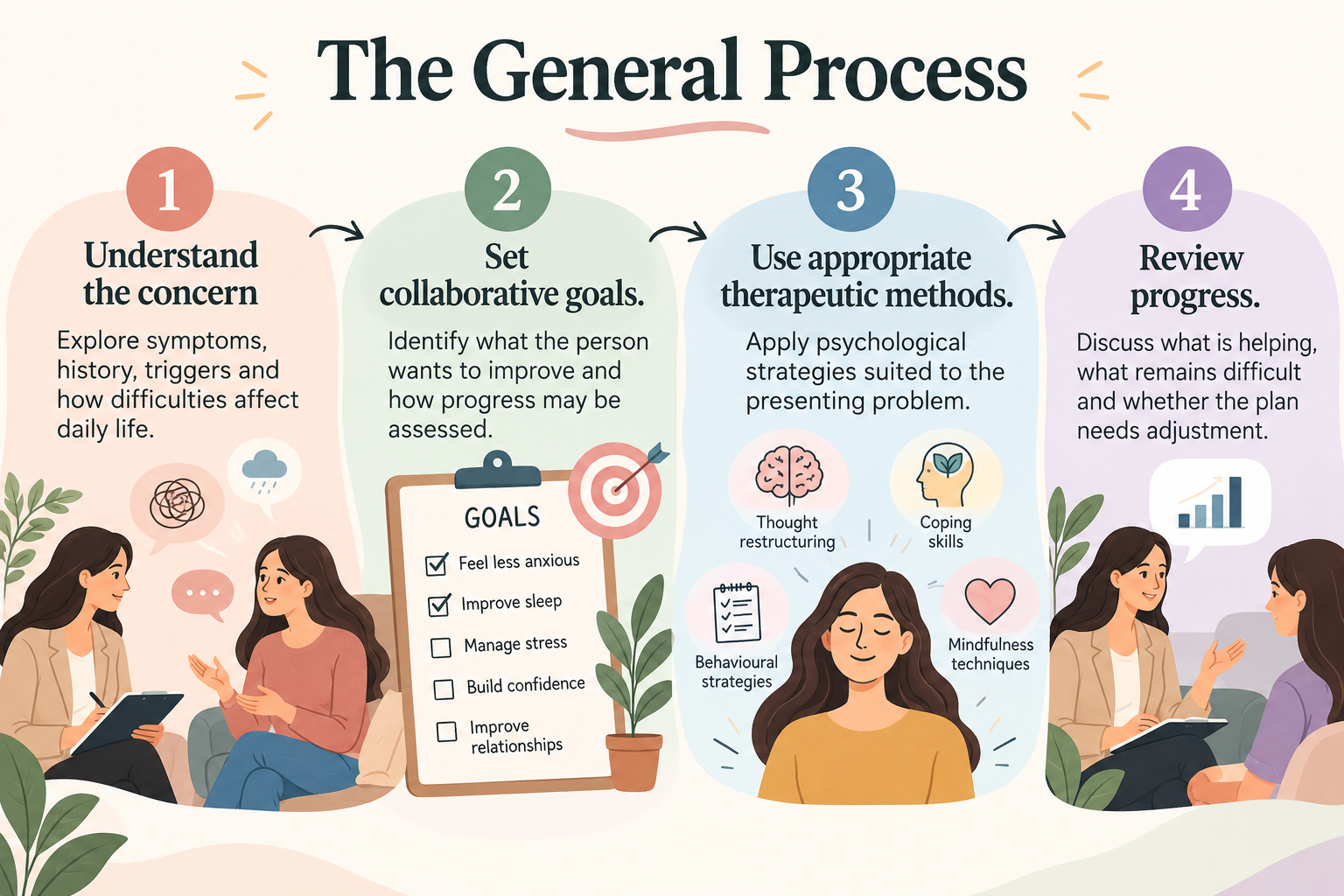


Psychotherapy is a structured psychological treatment that helps people understand their emotions, thoughts, behaviours and relationship patterns. It can support people dealing with anxiety, depression, stress, grief and other mental health concerns. At HeadSpace Clinic, the approach is chosen after assessment, based on your needs, goals and preferences.
What Is Psychotherapy?
Psychotherapy is a collaborative process in which a trained professional uses psychological methods to help you work through emotional, behavioural or relationship difficulties. It is often called talk therapy, but it can also include practical exercises, skills practice and activities between sessions. You do not need a formal diagnosis to ask for help.
What Can Psychotherapy Help With?
Depending on the approach, psychotherapy may help with:
- Anxiety, panic and excessive worry
- Depression and low mood
- OCD
- Stress and burnout
- Grief and life changes
- Relationship difficulties
- Anger and emotional regulation
- Low self-esteem
Having a symptom does not automatically mean a specific diagnosis, so an assessment comes first.
Main Types of Psychotherapy
- CBT: explores the links between thoughts, feelings and behaviours. Often used for anxiety, depression and panic.
- ERP: a specialised treatment for OCD that uses planned exposure while learning to resist compulsions.
- DBT: teaches mindfulness, emotional regulation and distress tolerance.
- Psychodynamic therapy: explores recurring emotional and relationship patterns.
- Supportive therapy: offers emotional support and builds on coping skills you already have.
- Family and couple therapy: focuses on communication and relationships.
No single therapy is best for everyone. Your clinician considers your main concern, its severity, the evidence for each approach and your preferences.
What Happens in a Session?
Sessions vary, but many follow a similar pattern: a check-in on how you have been, a focus for the day, the main therapy work and a short review of next steps. Some therapies include exercises to practise between sessions, and your therapist should explain why each one is used.
Your first session is not an exam. You can describe what has been difficult, ask questions and see whether the approach feels right. You do not need to share everything at once.
Therapy With or Without Medication
Psychotherapy can be used on its own when it is appropriate. For some people, therapy combined with medication works better after a psychiatric assessment. Never stop prescribed medication without speaking to your doctor.
How Is Progress Measured?
Progress is reviewed through changes in symptoms, daily functioning and your own goals, and sometimes through validated questionnaires. It is rarely a straight line. If therapy does not seem to be helping, talk to your therapist. The plan, approach or level of care may need review, and a second opinion is always reasonable.
Confidentiality and Safety
Confidentiality is central to therapy, but it has limits, such as serious safety concerns, legal requirements and safeguarding duties. Before you begin, ask how your notes and personal information will be handled.
Choosing a Psychotherapist in Delhi
Check the professional's qualifications, experience with your concern, proposed approach, fees and how progress will be reviewed. Be cautious of anyone who promises guaranteed results.
Take the First Step
You do not need to know which therapy you need before reaching out. An initial discussion can help clarify your options. Contact HeadSpace Clinic at +91 9971166040 or +91 9099097381. Clinics are in Paschim Vihar, Rohini and Narela.
This article is for general information only and is not medical advice. Outcomes vary from person to person. In an emergency in India, call 112 or go to the nearest emergency department.