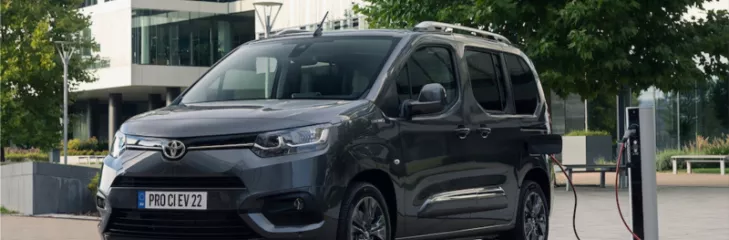
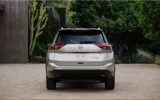

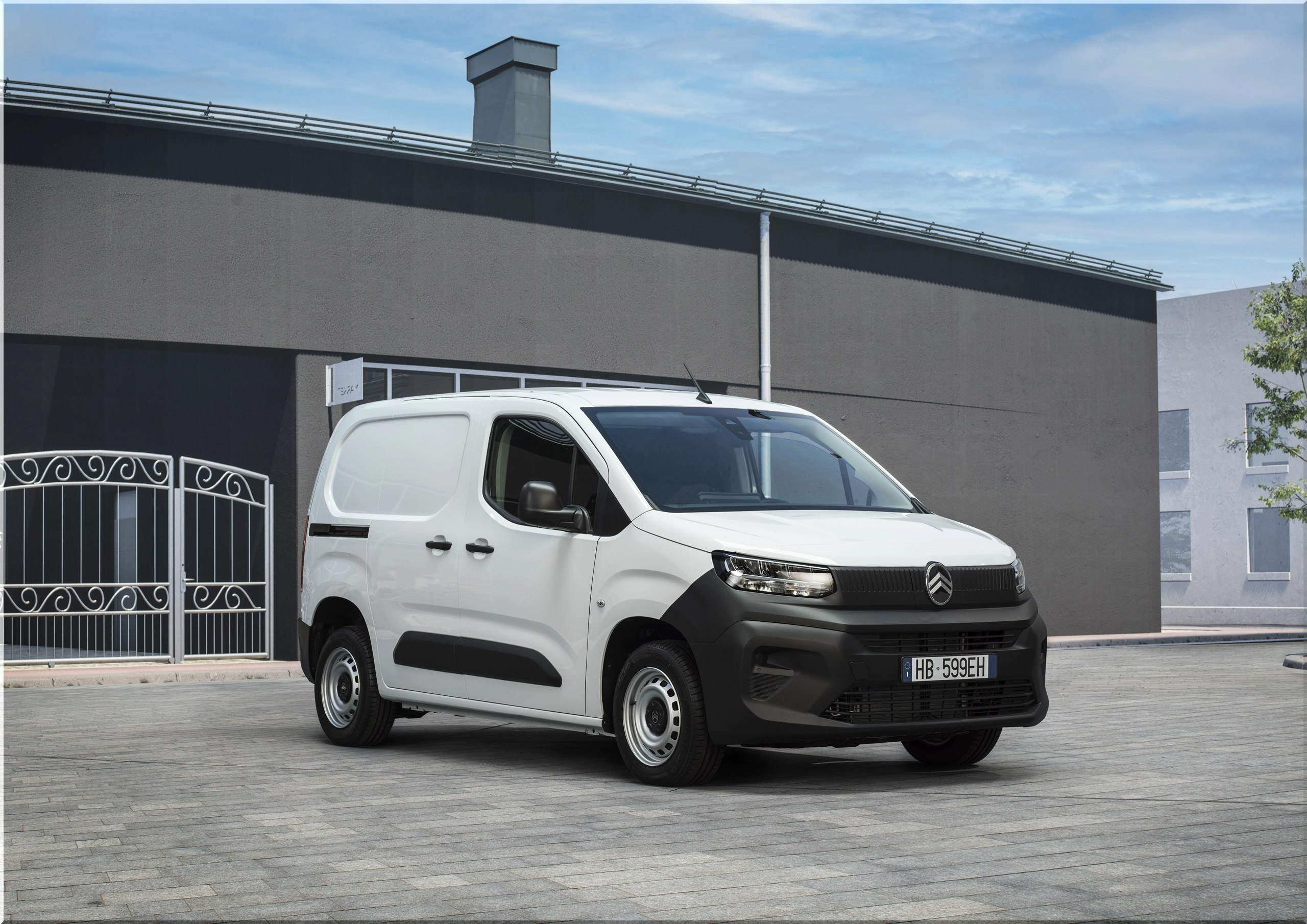
The Citroën Berlingo Van First targets businesses that need carrying capacity without paying for the highest equipment grade. Citroën opened German orders with a starting list price of €21,700 excluding VAT.
First joins Plus and Max in Germany's revised Berlingo van range. Citroën positions it around practical equipment and flexible loading, giving tradespeople a lower-cost route into the model.
What Does the Entry Price Include?
Germany's standard equipment includes manual air conditioning, rear parking sensors, cruise control with a speed limiter, heated electrically adjustable mirrors and two USB-C ports. A driver-monitoring camera supports fatigue detection, while the Connect Box provides emergency and assistance functions.
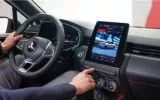
The cabin also includes a smartphone station and a 10-inch instrument display, equivalent to a 254 mm diagonal. Buyers should distinguish that driver display from the 10-inch infotainment system that Citroën lists for Plus. First's equipment supports daily work, but businesses that need a reversing camera should compare the higher trim's complete quotation.
Petrol, Diesel and Electric Powertrains
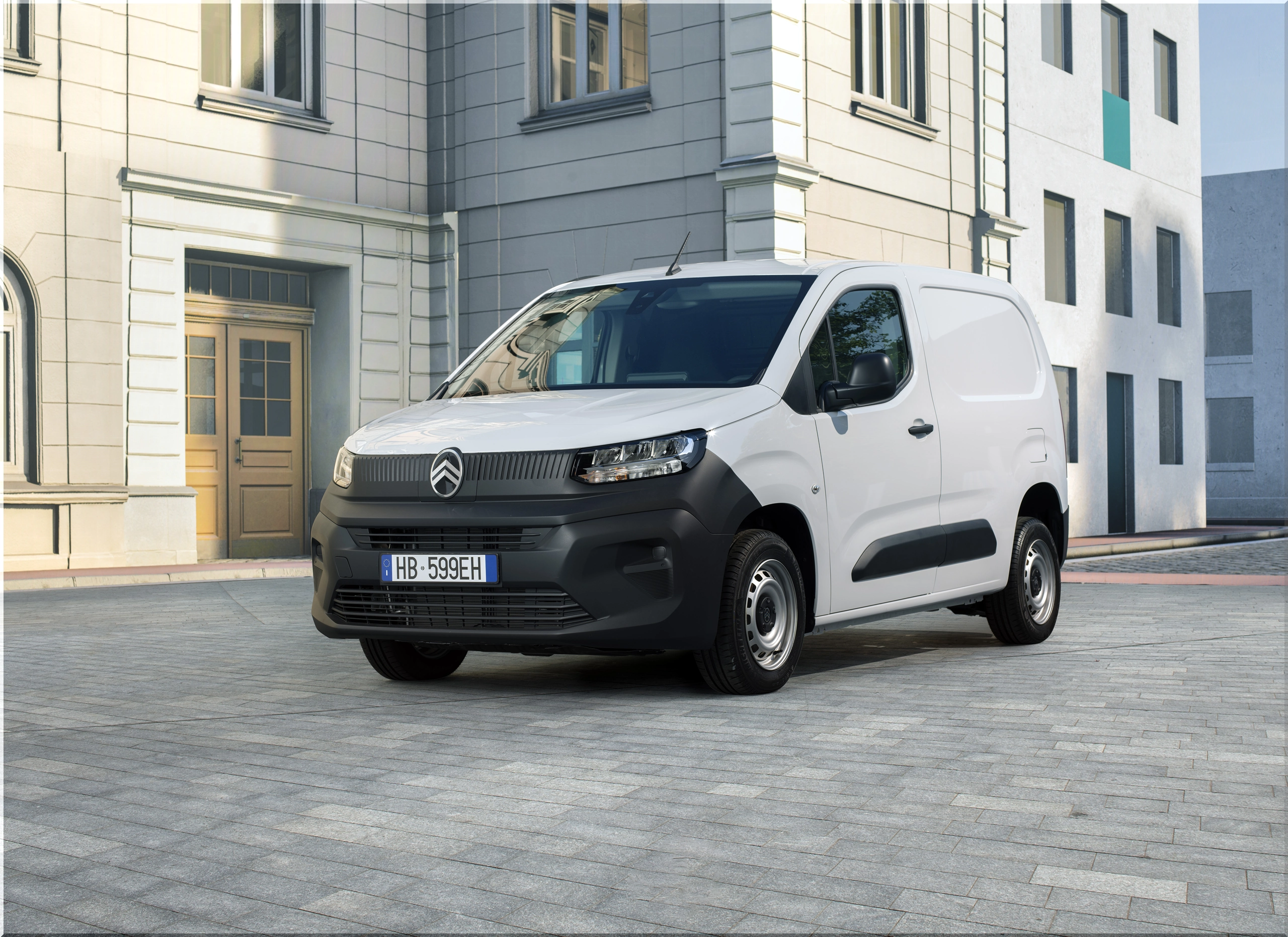
Citroën keeps several propulsion options available rather than forcing every business into the same operating model. Its launch material names HDi 100 and HDi 130 diesel choices alongside petrol and battery-electric versions.
| Powertrain | Published output | Operating consideration |
|---|---|---|
| Petrol | 81 kW / 110 PS | Assess fuel cost against annual distance |
| Diesel | Two choices, up to 96 kW / 131 PS in Germany | Compare loaded road use and transmission availability |
| Electric | 100 kW / 136 PS | Check route distance and dependable charging access |
| Mild hybrid | Citroën plans a 2027 introduction | Await market-specific specifications and pricing |
Citroën advertises up to 270 km of electric range for First in its international announcement. That figure describes the advertised maximum, rather than a loaded winter-route guarantee. Heating demand, speed, cargo weight and charging availability all affect operational suitability.
For a delivery business, electric propulsion makes financial sense only when the route and charging schedule support the work. Diesel merits consideration for frequent longer trips, while buyers with lighter workloads should compare petrol's purchase and running costs.
FlexiSeat Adds Space Without a Larger Van
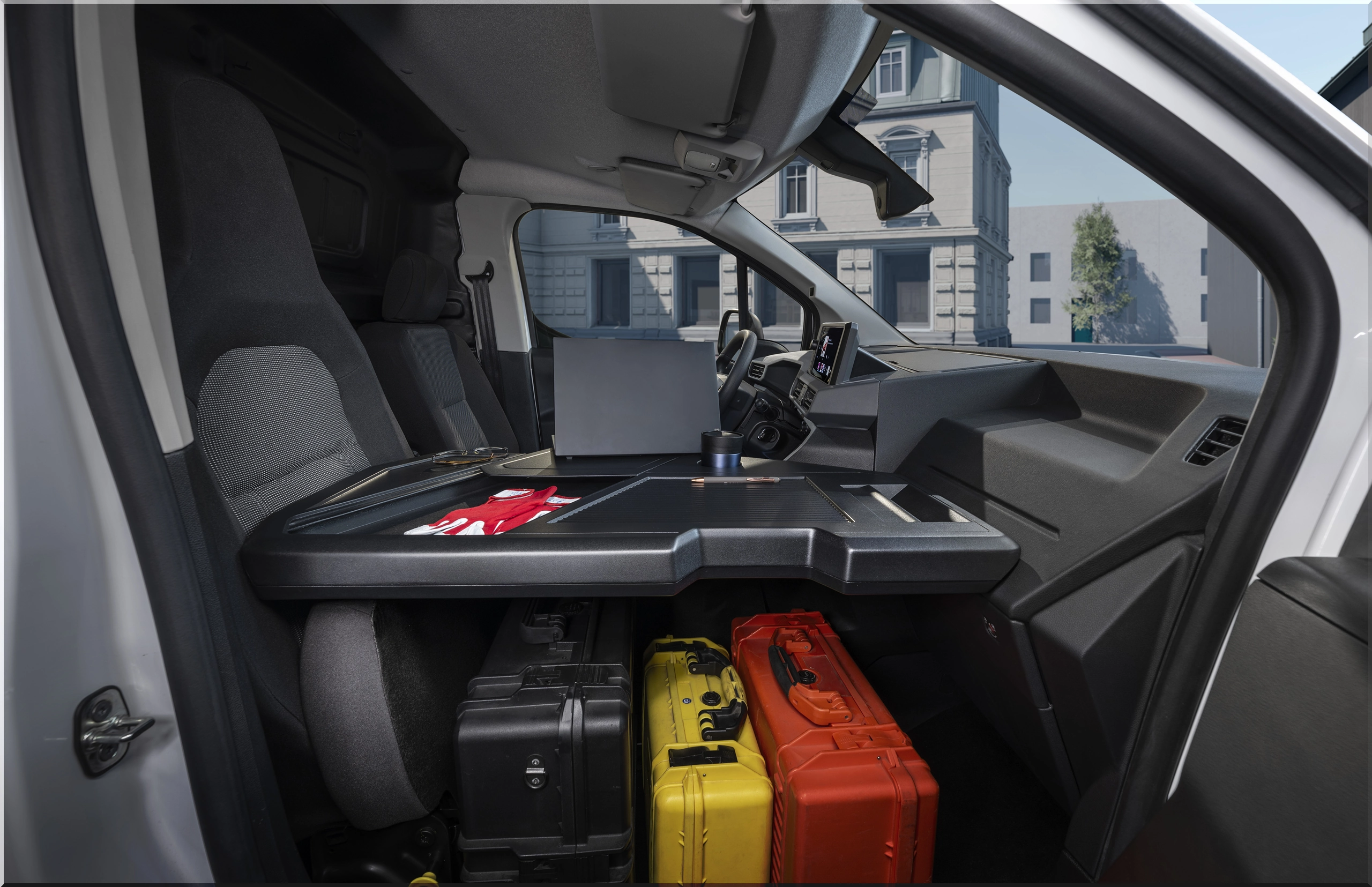
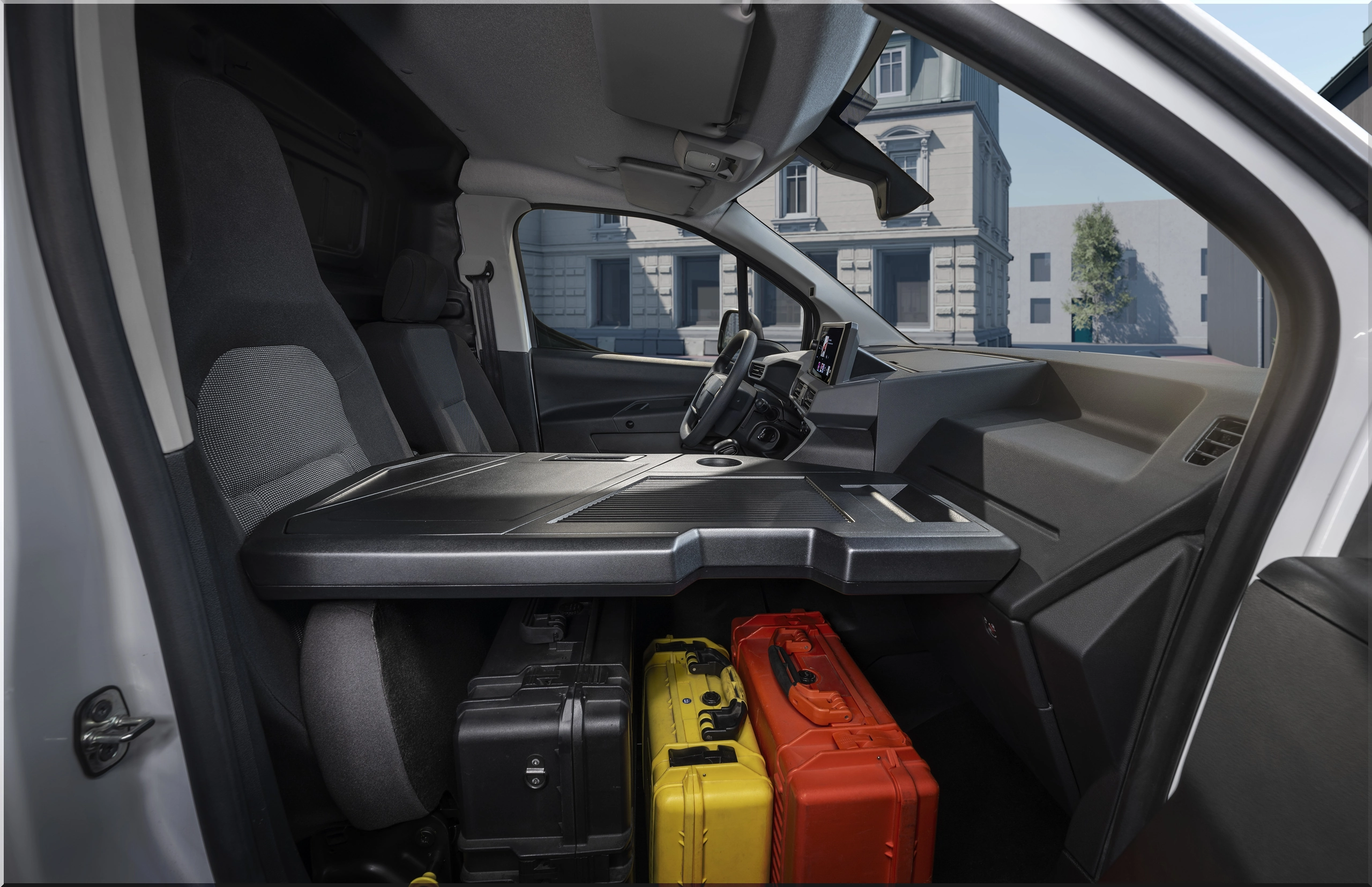
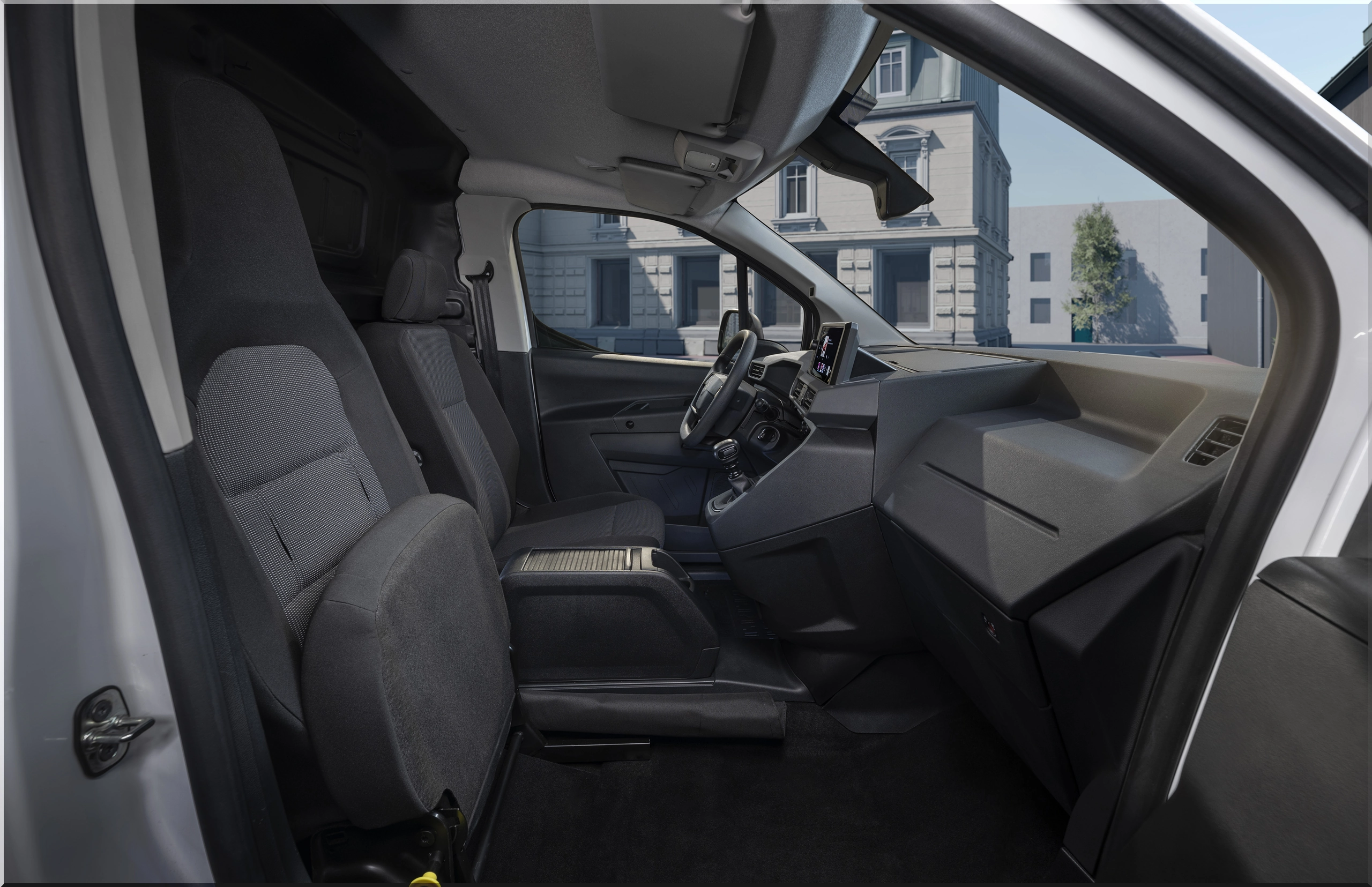
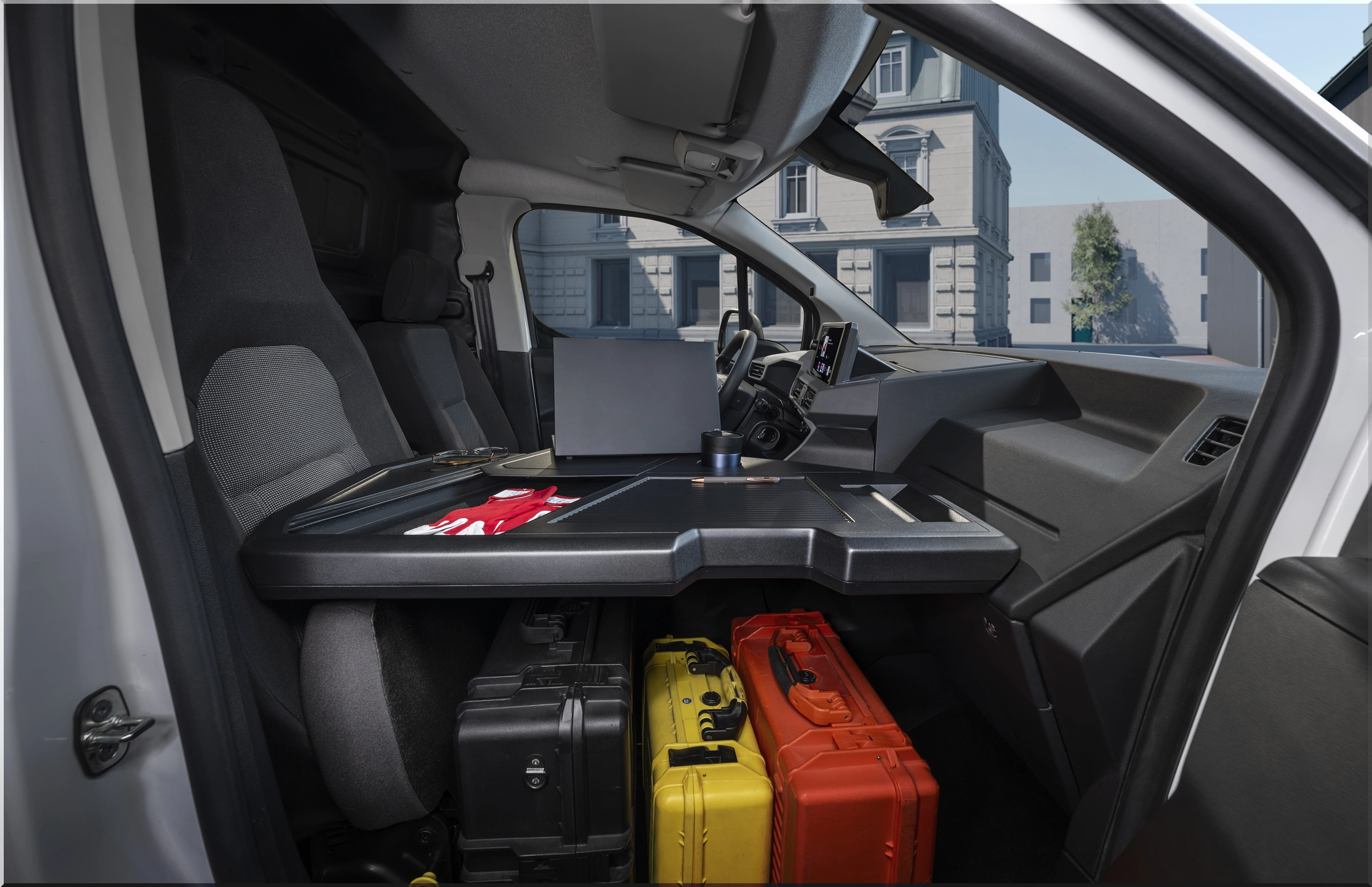
The standard FlexiSeat passenger seat folds to release up to 0.5 m³, or 500 litres, of additional loading space. Citroën advertises a First range spanning 3.3–4.4 m³ and payloads reaching 1,000 kg, depending on configuration.
The logic follows seat usage. Citroën says professionals drive alone about 80% of the time, so a folding passenger position lets them use otherwise idle cabin space for cargo. However, seat folding increases available volume; it does not increase the vehicle's permitted load weight.
Before selecting a configuration:
- Measure the longest item you carry routinely, including its packaging.
- Add the weight of shelving, tools and permanent accessories to your load assessment.
- Confirm the ordered vehicle's payload rather than applying the range's maximum to every version.
How Does First Compare With Compact-Van Rivals?
Looking at the data, cargo configuration deserves as much attention as headline capacity. The following European compact-van figures compare published loading arrangements, with Renault's entries covering two-seat panel vans and Volkswagen's figures covering its 2026 models.
| Compact van | Published cargo volume | Capacity qualification |
|---|---|---|
| Berlingo Van First | 3.3–4.4 m³ | Body length and modular loading affect the maximum |
| Renault Kangoo Van | 3.3 m³; Maxi 4.2 m³ | Standard load volumes for the listed panel-van bodies |
| Volkswagen Caddy Cargo | 3.1 m³; Maxi 3.7 m³ | Volkswagen publishes separate short and long-body figures |
First's advertised ceiling exceeds these listed rivals' volumes, but its 4.4 m³ figure includes a modular loading arrangement. Consequently, buyers should test their actual cargo with the passenger seat in its required position before declaring a capacity winner.
Renault also announced an updated Kangoo electric range of up to 354 km, with homologation pending. That gives electric-van shoppers another option to assess once final specifications and local order availability arrive.
Pro-Tips: Should Your Business Choose First?
Choose First when its standard equipment and verified load capacity cover your daily work. Pay for Plus or Max when their additional equipment solves a recurring operational need.
In addition, request itemised quotations:
- Separate the base vehicle, options, delivery charges and VAT.
- Confirm the exact powertrain, body length and payload in writing.
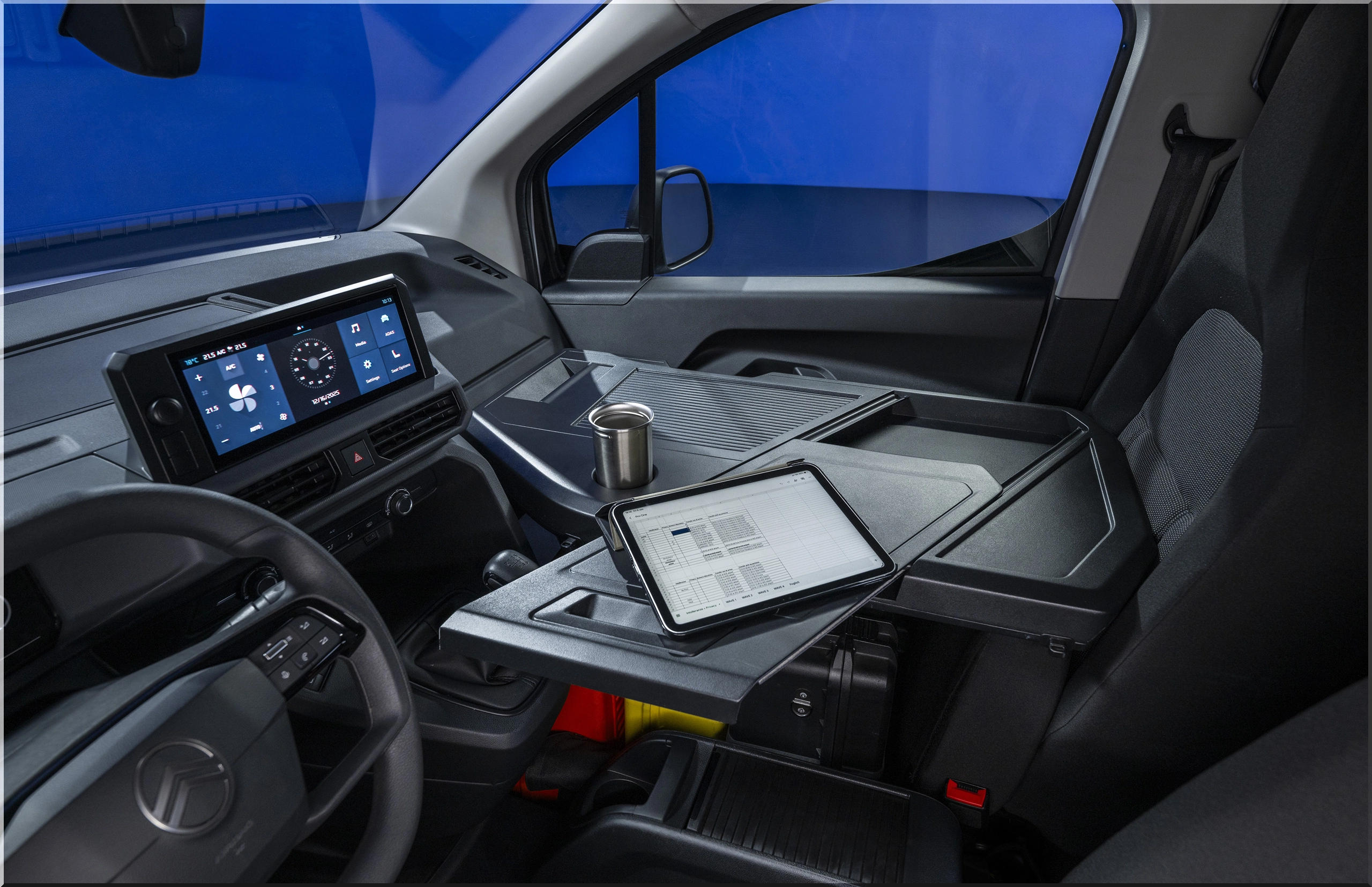
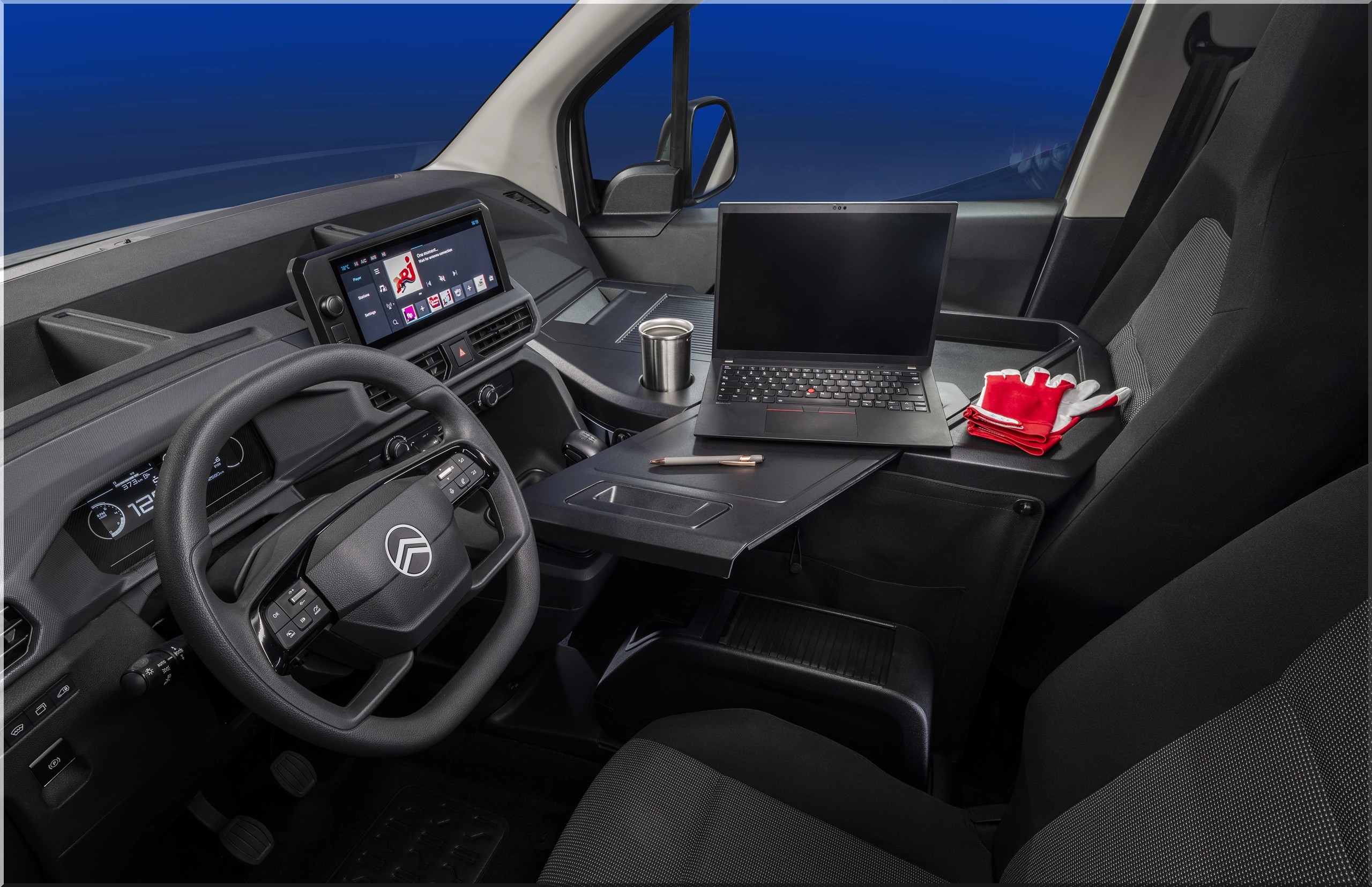
- Price the optional ModuTable separately if you need a laptop workspace.
From an expert perspective, the best purchase preserves useful capacity while controlling total operating cost. A lower invoice helps, but fuel or electricity costs, servicing and downtime decide the longer-term return.

- Log in to post comments